Artist Profile: Elaine Tata
Artist Profile: Elaine Tata
Cape Cod Art / ART Annual 2026 / Art & Entertainment
Writer: Julie Craven Wagner
For Elaine Tata, painting has always been rooted in observation—but over time, what she sees has become less about precise representation and more about feeling, memory, and response. Her artistic journey, much like the shifting light and landscape of Provincetown where she now lives and works, has moved steadily from clarity toward complexity, from realism into a more intuitive, abstract language.
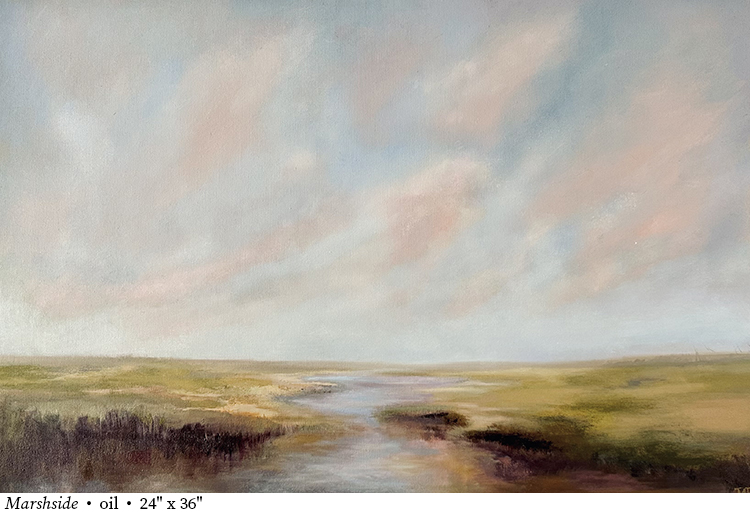
Tata began her career working primarily in oils, creating landscapes that were grounded in careful study and a deep respect for place. Her earlier work reflected a traditional approach—compositions that captured the Cape’s distinctive terrain with a recognizable sense of structure and form. Yet even within that framework, there was an underlying sensitivity to atmosphere, to the subtle interplay of color and light that defines the Outer Cape.
Over time, however, that relationship to the landscape began to shift.
“I realized I didn’t need to describe everything,” she explains. “I could suggest it—let it emerge in a different way.”
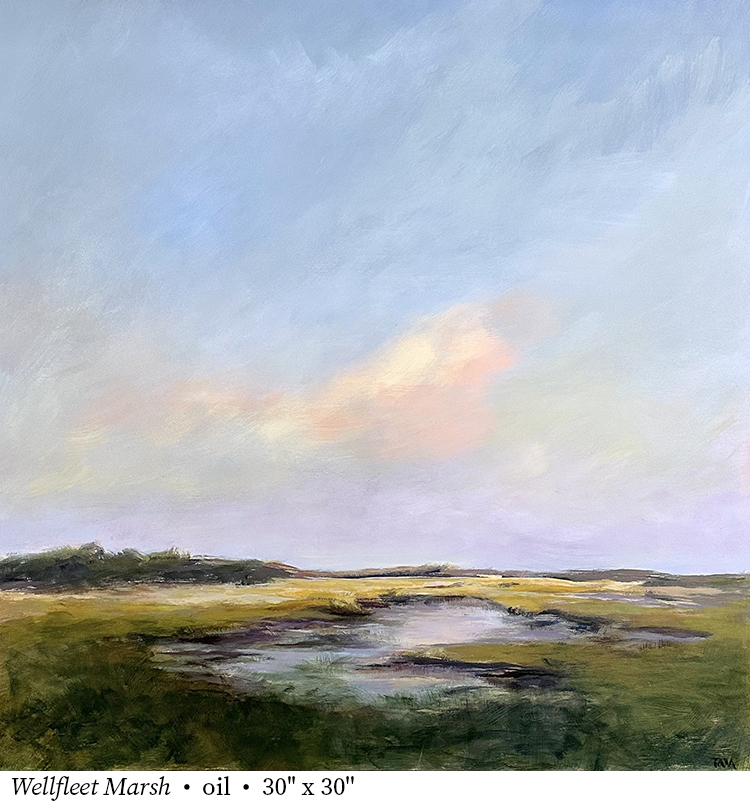
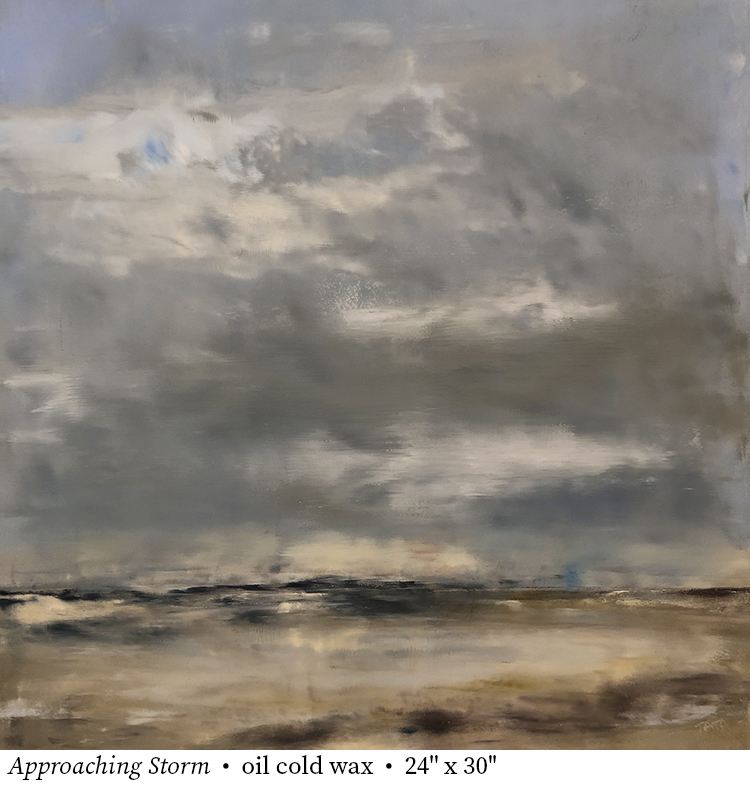
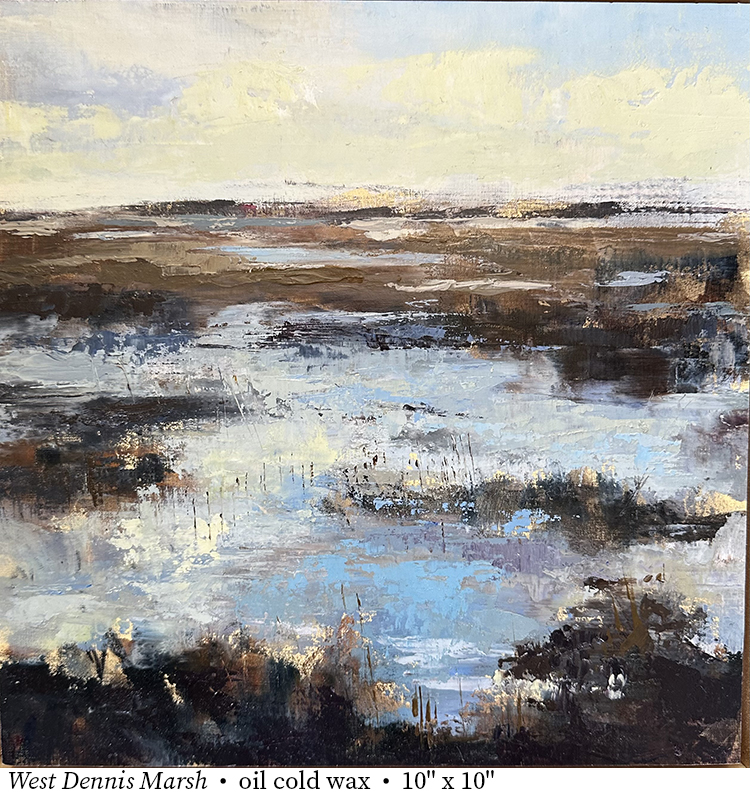
That realization marked a turning point. Moving away from strict representation, Tata began exploring cold wax painting, a medium that allowed her to build surfaces through layering, scraping, and excavation. The process itself became integral to the work—less about capturing a scene and more about uncovering one.
Cold wax, when combined with oil paint, creates a dense, matte surface that invites manipulation. Tata embraces that physicality, working and reworking each piece until something unexpected begins to take shape. Marks are added, then partially removed; textures are revealed beneath layers; colors shift as they are pushed and pulled across the surface.
“It’s a process of discovery,” she says. “You don’t always know where it’s going.”
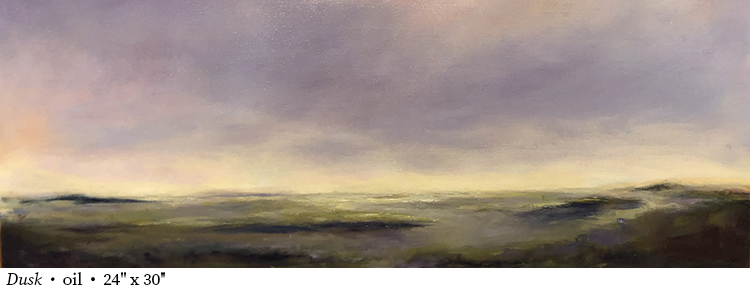
That openness has transformed not only how Tata paints, but how she sees. While her work remains deeply connected to the landscape, it no longer seeks to replicate it. Instead, her paintings evoke the essence of place—the rhythm of dunes, the movement of water, the quiet expansiveness of sky—without anchoring those elements to a specific view.
Painting in Provincetown has been central to that evolution. Long known as a haven for artists drawn to both its natural beauty and its creative legacy, the town offers a kind of permission—to experiment, to take risks, to move beyond expectation. For Tata, it has provided both inspiration and freedom.
“There’s something about being here,” she reflects. “The landscape is always changing, and that gives you room to change, too.”
That sense of constant transformation is evident in her work. Layers of color suggest shifting tides or windswept terrain; scraped passages reveal histories beneath the surface; compositions hover between abstraction and recognition, inviting the viewer to engage in their own process of interpretation.
In many ways, Tata’s paintings mirror the experience of walking along the Outer Cape—where familiar elements dissolve into something more atmospheric, and where what is seen is often shaped as much by perception as by reality.
What remains consistent throughout her work is a commitment to exploration. Rather than settling into a single approach, Tata continues to push her practice forward, allowing each piece to inform the next. It is a process that requires both patience and trust—an acceptance that meaning may not be immediate, but will emerge through engagement.
For Tata, painting is no longer about capturing a moment, but about responding to it—about translating the experience of a place into something more layered, more personal, and ultimately, more open.
Elaine Tata’s studio is in the Provincetown Commons (Studio A) on Bradford Street. She is represented by Blue Heron Gallery in Wellfleet. And her work can be viewed at elainetata.com.
~Julie Craven Wagner