Artist Profile: Ed Walsh
Artist Profile: Ed Walsh
Cape Cod Art / ART Annual 2026 / Art & Entertainment
Writer: Julie Craven Wagner
There is a quiet confidence in the work of Provincetown-based painter Ed Walsh—an assurance that feels less like practiced bravado and more like something earned. It is, perhaps, the result of arriving at painting not as a lifelong pursuit, but as a second act—one chosen deliberately, and pursued with both discipline and wonder.
Walsh did not grow up with a paintbrush in hand. “There are people who, throughout their life kind of doodle and sketch,” he reflects. “I was not one of those people.” His early creative exposure came instead through architecture, which he studied briefly in college. The experience offered a foundation in observation and structure, but it would be decades before he returned to visual expression in any meaningful way.
That return came in his 50s—a moment that might feel late to some, but for Walsh, it proved to be exactly the right time. With a life already lived—careers explored, responsibilities met—he approached painting with a clarity of purpose that many artists spend years trying to find. What began as curiosity quickly deepened into commitment.
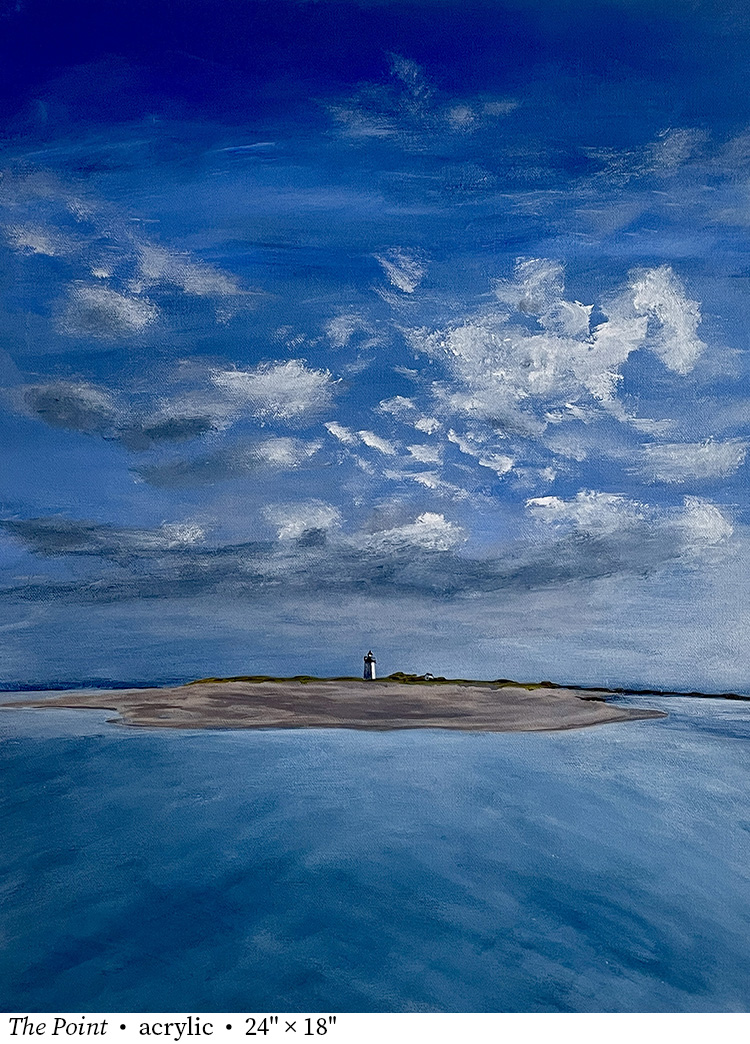
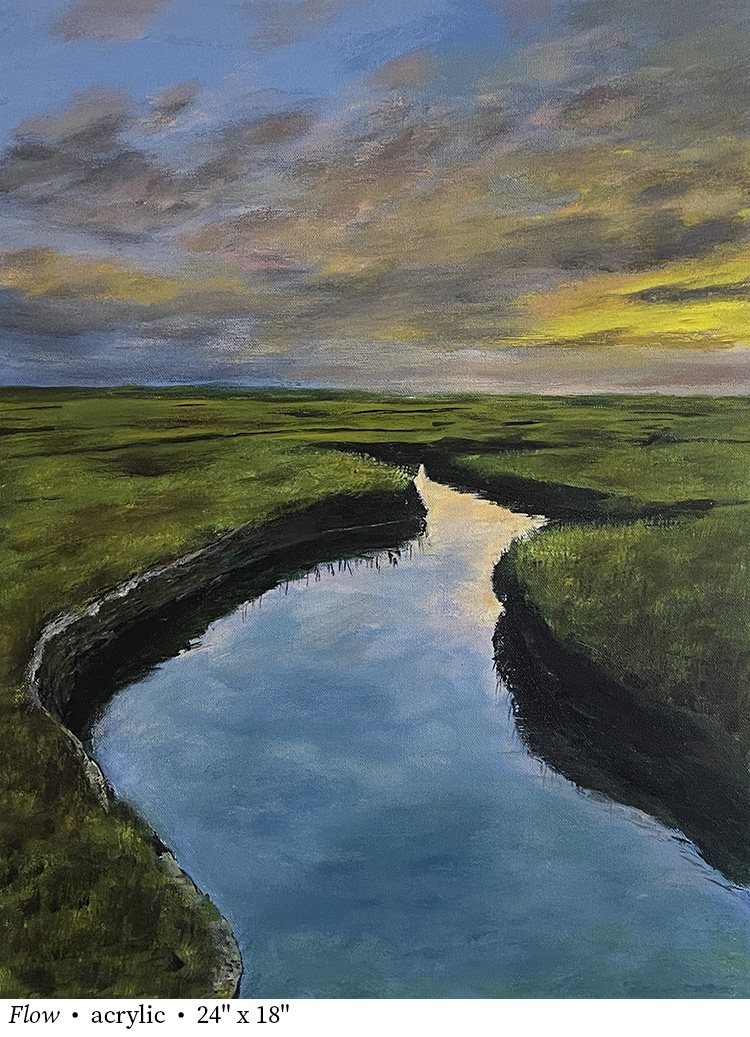
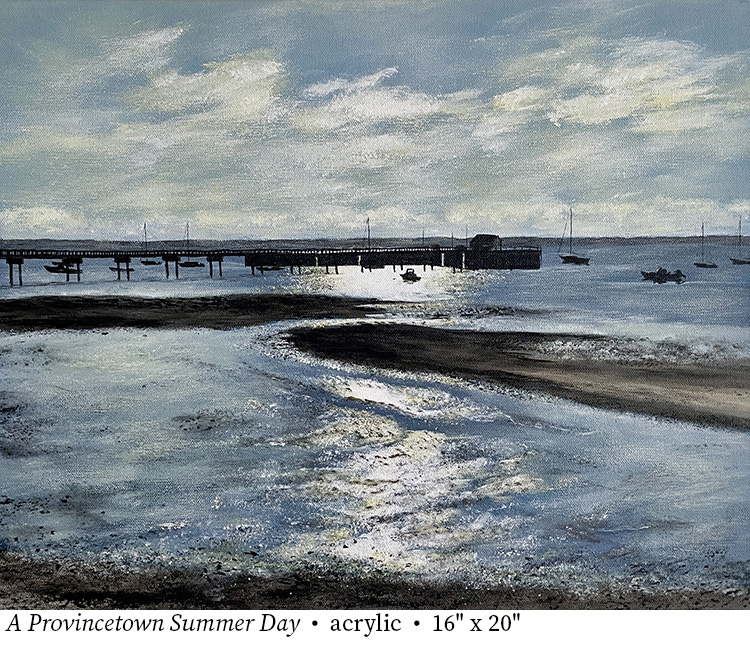
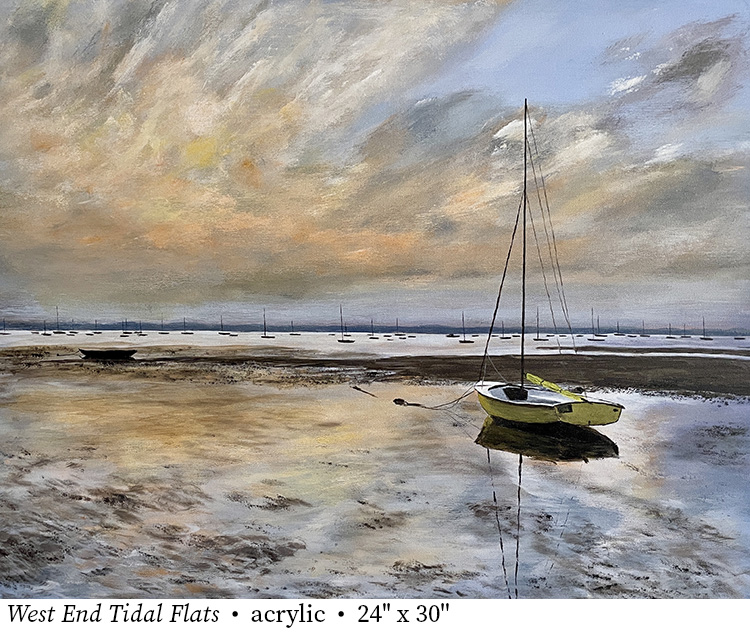
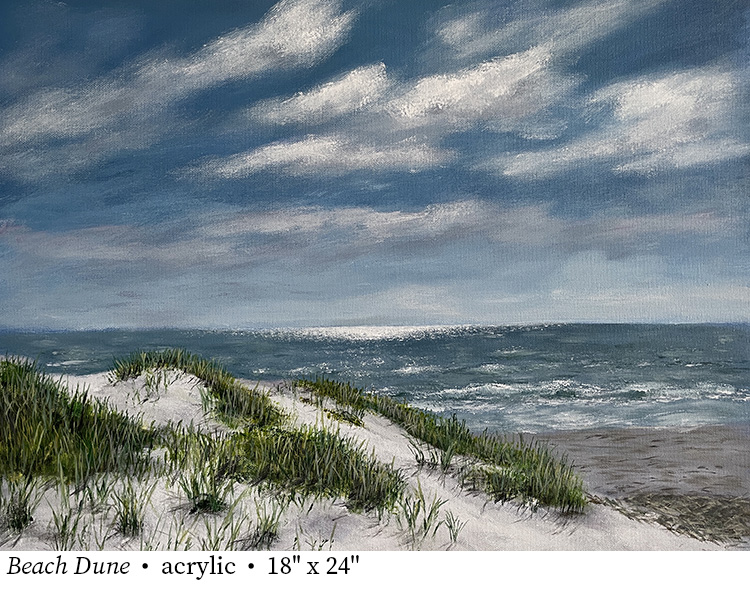
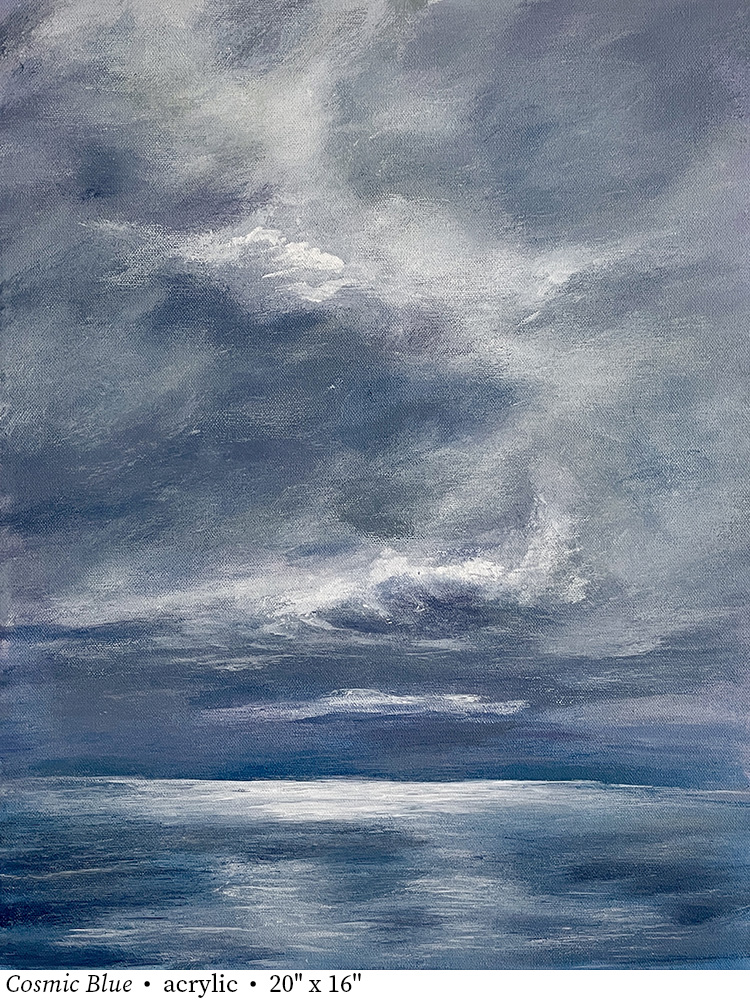
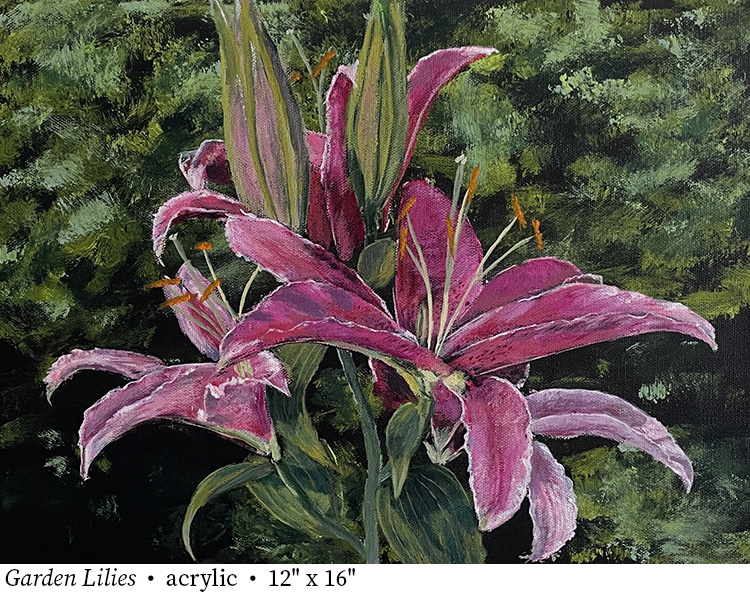
Working primarily in acrylic, Walsh is drawn to landscapes that capture not just a place, but a feeling. His compositions often lean into atmosphere—the subtle interplay of light and shadow, the quiet drama of a horizon line, the sense of stillness that exists just before or after movement. There is restraint in his work, a willingness to let a scene breathe rather than overwork it, and in that restraint, a growing mastery.
“I think what painting does for me is it slows me down,” Walsh says. “It makes me really look.” That act of looking—of truly seeing—has become central to both his process and his evolution as an artist. Where once he might have passed by a scene without much notice, he now finds himself studying the way light falls across a structure or how color shifts over the course of an afternoon.
In Provincetown, that ever-changing light offers endless inspiration. Long a haven for artists, the Outer Cape provides Walsh with both subject matter and a sense of creative community. The town’s storied artistic legacy is not lost on him, but rather than feeling intimidated by it, he seems to embrace it as part of the larger continuum he is now entering.
There is also a notable humility in Walsh’s approach—an openness to learning that continues to shape his work. Having come to painting later in life, he does not carry the weight of early expectations. Instead, he leans into the process, allowing each painting to inform the next. It is a mindset that keeps the work fresh and evolving.
That evolution is evident not only in his technical growth, but in his increasing confidence with composition and color. His paintings suggest an artist who is beginning to trust his instincts more fully—who understands when to push and when to hold back. It is a balance that cannot be rushed, and one that Walsh seems content to develop over time.
If there is a throughline in his work, it is a sense of presence. Whether capturing a quiet coastal view or a more structured scene, Walsh invites the viewer to pause, to linger, and to see the world as he does—carefully, thoughtfully, and without distraction.
For Walsh, the journey into painting may have started later than most, but it carries with it a depth of perspective that only time can provide. And in that way, his work feels not like a beginning, but like an arrival—one that continues to unfold with each canvas.
Walsh’s work can be seen at Gallery 193 ArtSpace, 193 Commercial Street, Provincetown.
~Julie Craven Wagner