Artist Profile: Terry Rockwood
Artist Profile: Terry Rockwood
Cape Cod Art / ART Annual 2026 / Art & Entertainment
Writer: Julie Craven Wagner
For many Cape Cod art lovers, Terry Rockwood’s paintings are immediately recognizable. Expansive marshes washed in soft sage greens, sailboats drifting across misty harbors, and quiet coastal landscapes painted with the luminous color that defines the Cape have long made his work a favorite among collectors and interior designers alike. Those serene impressionist canvases still line the walls of countless homes, offering the unmistakable sense of place that has drawn generations of artists to this peninsula.
Today, however, visitors who wander into Rockwood’s Wobbly Barn studio discover something entirely unexpected.
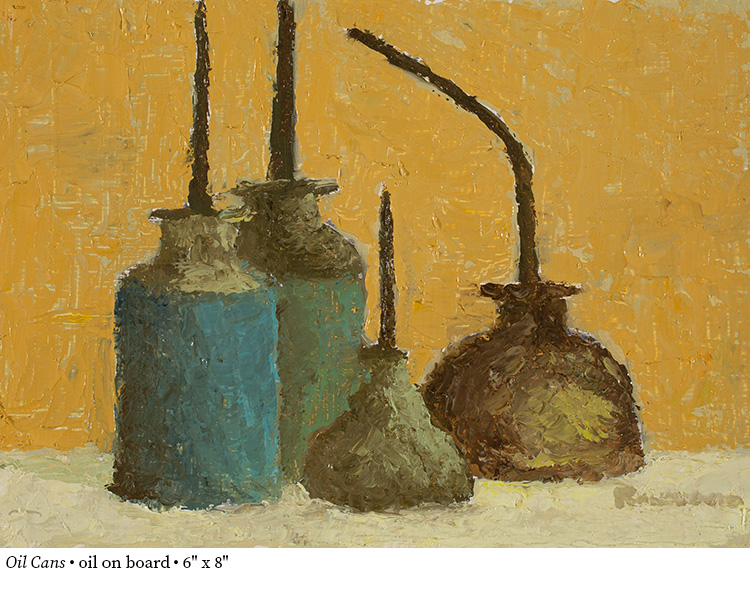
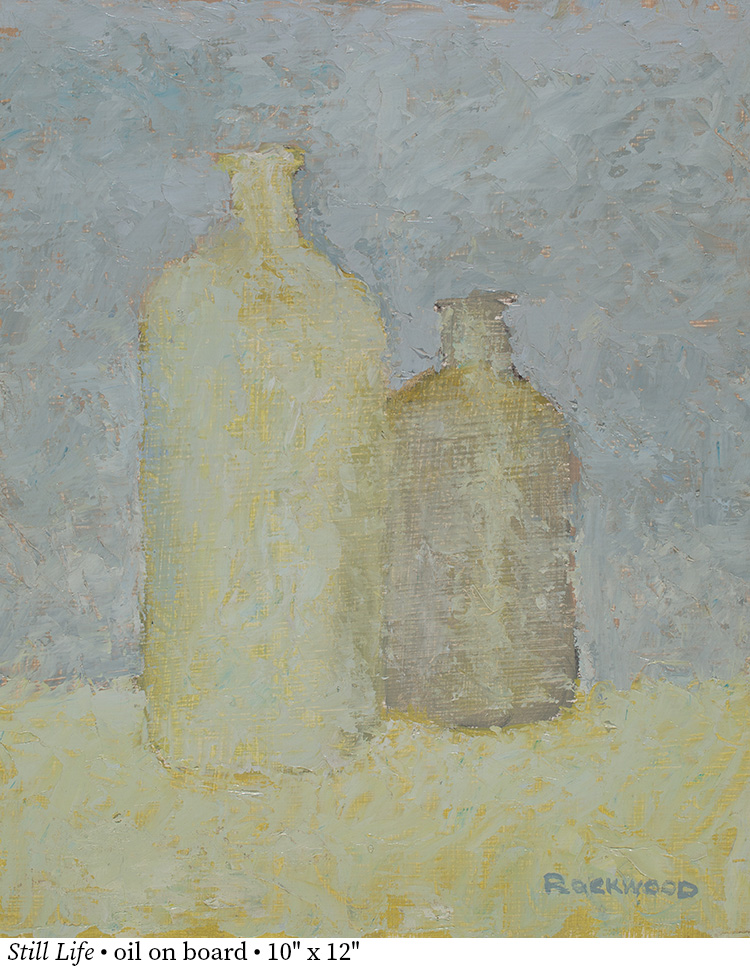
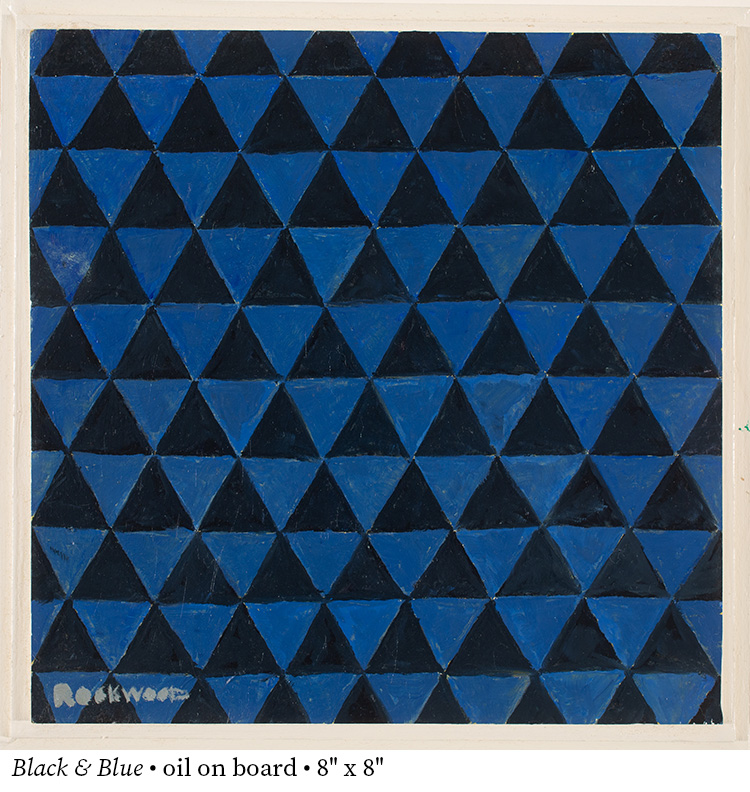
The weathered building, itself as unconventional as its owner, is filled with decades of artistic exploration. Traditional landscapes stand alongside bold geometric abstractions. Painted wooden cubes and sculptural obelisks occupy the same space as oils depicting familiar shorelines. It is less a gallery than a living record of an artist who refuses to stand still.
That independent spirit has defined Rockwood from the very beginning. Growing up near Springfield, he initially followed the path expected of him, enrolling in engineering like much of his family. “My father was an engineer. My brother’s an engineer. The whole family was engineers,” he says with a laugh. “I call myself the black sheep.”
Leaving college behind, Rockwood arrived on Cape Cod in the mid-1960s with little more than a desire for a fresh start. He found work tending masonry, roofing, fishing and eventually woodworking, embracing the physical labor and the welcoming character of the year-round Cape community. “I loved the Cape,” he recalls. “I didn’t want to be anywhere else.”
Woodworking became his first creative profession. The Wobbly Barn, originally an antique shop whose iconic sign came with the property, evolved into a furniture workshop where Rockwood crafted custom pieces rooted in the clean, functional simplicity of Shaker design. Those same principles of balance, structure and restraint would later find their way into his paintings.
Like so many Cape artists, Rockwood eventually found his way to the Cape School of Art, where studying under Henry Hensche deepened his appreciation for light, color and atmosphere. For decades he became known for impressionist landscapes whose gentle palette seemed perfectly suited to Cape Cod homes.
Then, after years of commercial success, curiosity began pulling him in an entirely different direction.
A comprehensive volume on twentieth-century art opened the door to Russian Constructivism, the Bauhaus movement, Minimalism and artists such as Mondrian, Kandinsky and Donald Judd. Rather than viewing modernism as a departure from his earlier work, Rockwood saw it as another path to explore. The grids and geometric forms that emerged on his canvases naturally expanded into painted wooden cubes and sculptural forms, marrying his lifelong love of craftsmanship with an ever-growing fascination for abstraction.
“I want it to be totally abstract,” he explains. “People look at it and say, ‘Oh, isn’t that interesting,’ but not label it.” For Rockwood, the goal is not to depict something recognizable but to invite viewers to experience color, shape and balance without searching for familiar answers.
Despite the dramatic stylistic shift, there remains a clear thread connecting everything he creates. The soft blues, muted greens and increasingly vibrant coastal hues that first defined his impressionist work continue to appear throughout his modern pieces. The Cape has never stopped influencing him; it simply speaks through a different visual language.
Now in his eighties, Rockwood talks less about accomplishments than possibilities. “It’s evolving,” he says. “I have no idea what’s going to happen…it’s kind of exciting to see what’s going to happen next.” That sense of discovery, he believes, is what keeps him moving forward. “The future is infinite.”
For an artist whose career has already spanned woodworking, impressionism and modern abstraction, there may be no better philosophy. Terry Rockwood has never been interested in arriving at a final destination. The joy has always been in seeing where curiosity leads next.
Terry Rockwood’s work is on display at Sarah Jessica Fine Arts in Provincetown and at his studio, The Wobbly Barn on Route 6A in Brewster where he says the door is always open.
~Julie Craven Wagner