Notable Neighbors
Notable Neighbors
Cape Cod Life / LIFE Annual 2026 / People & Businesses
Writer: Cape Cod Life Publications
Who are your neighbors, really? Some you would recognize as you cross paths while out walking your dog or perhaps a quick wave while they’re tending to their yard, or a polite greeting while in line at the post office or the nearby grocery store, but nowadays, we don’t often have the occasion to interact with them more than that—but we should. Maya Angelou wrote in her poem Human Family, “I note the obvious differences between each sort and type, but we are more alike, my friends, than we are unalike.” Here, we introduce you to some of your neighbors in the hopes of bridging those gaps. Our neighbors may be artists, builders, change-makers, parents or athletes, but what unites us is our shared affection for this stretch of land and sea and giving back—in ways both big and small. ~ Leslie Hatton
Laurie York
By Kathy Blackwell
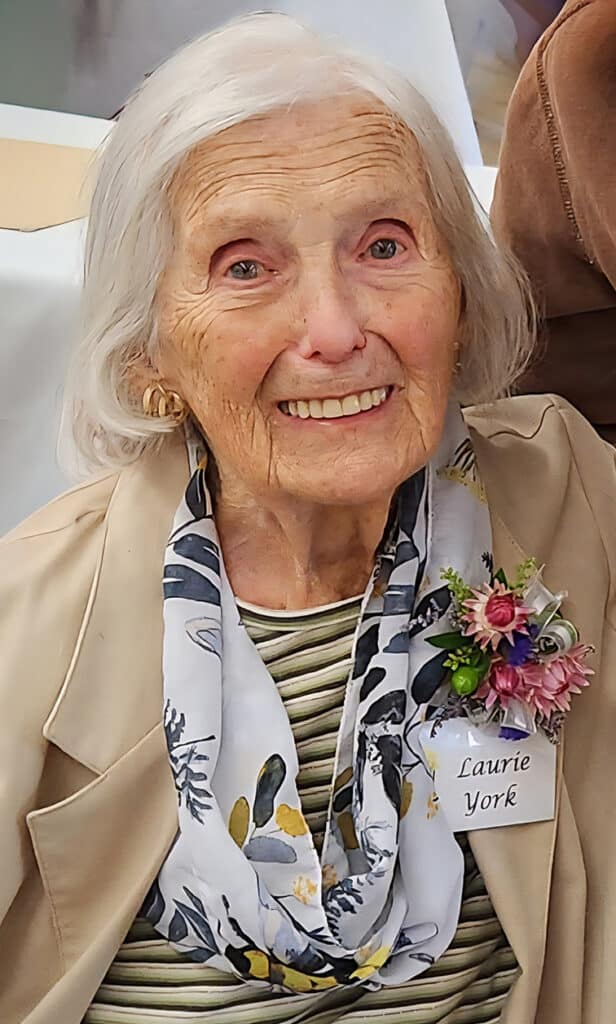
The tiny village of Cataumet, an off-the-beaten-path, historical gem which is part of the town of Bourne, is the home of one notable person and centenarian, Laurie York, who is 101 years young and chock full of a well-lived and spirited life.
Laurie was born Dolores Zintz, on March 12, 1924 in East Aurora, New York. She was the youngest of 5 children and the family lived on a farm. Her father immigrated from Romania where he had lived at the foot of the Carpathian Alps. As a young girl, he told Laurie stories of his homeland while she helped him in their gardens. “I was the youngest, and everyone was busy, so I went outside and into the woods and explored!” she says with a twinkle in her eye. Those early tales and adventures began a lifelong interest and passion about the plant world, resulting in an extensive list of ways in which she shared that passion on Cape Cod: co-founding The Cape Cod Organic Gardening Club, developing and restoring educational and historic gardens at the Aptucxet Trading Post and the Briggs-McDermott House in Bourne, holding educational workshops on herbs at Thornton Burgess Society in Sandwich and co-creating a vision for—and implementing—the creation of “Three Mile Look,” a public park on the Cape Cod Canal, just to name a few. Laurie has also received several awards, such as the Elizabeth B. McDermott Historical Preservation Award (an impressive 4 times), edited the book A Cookery and Memories from Old Bourne, which received the prestigious Mcllhenney Cookbook Award in the “cookbook with a historical perspective” category. She also wrote In Love with Herbs! A Collection of Herb Growing Workshops. Her daughter Andrea shares, “Every table and desk space upstairs has piles of books about plants, gardens and herbs, that my Mom still refers to this day!”
Laurie attended Russell State College in New York for two years and then transferred to Boston School for Occupational Therapy in partnership with Tufts University. Graduating in 1946, Laurie was recruited by the Head of Boston Psychopathic Hospital, which later became Mass Mental Health. She was hired as an activities director, to help develop a new approach to institutionalized care. In a time when the MA State Dept. of Mental Health was working to move people out of state hospitals and into community residences, Laurie developed day programs for the residents, the first of which was at Pilot House in Hyannis.
To highlight her innovative approach, she asked a local church if they would like to set up a soup kitchen and the residents could help create it and run it a few days a week. Through this approach, the residents would learn useful new skills, while feeling valued and connected socially. At the same time, it would help dispel concerns the community might have about people released from mental institutions, moving into their neighborhood. It was a win-win for everyone. Her programming then became a model for other residential programs across the state.
Laurie met her husband Richard (Dick) York, while still at Boston Psychopathic Hospital where he was interning as part of a PHD program in Psychology. The couple married in 1948 and had four children. The Yorks shared and enjoyed parallel careers in mental health for several decades, both pioneering work in re-defining mental health practices.
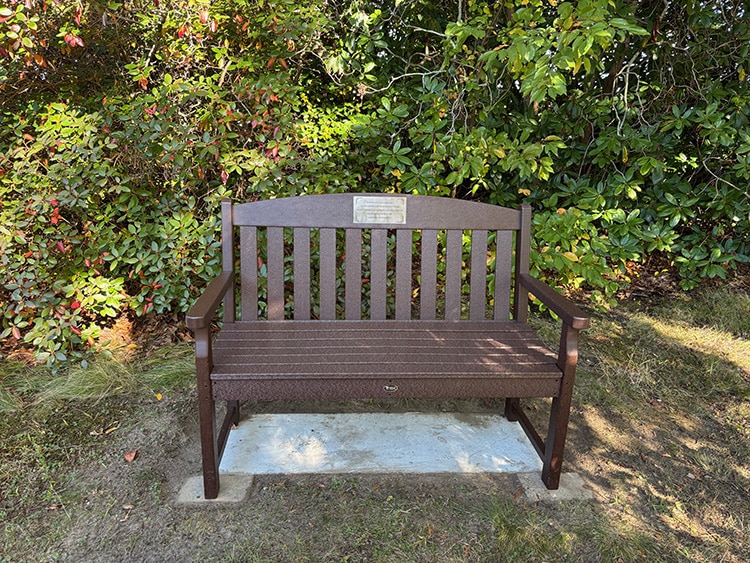
The family lived in many places, but always spent their summers in Cataumet, before moving there full time, in 1968. Whenever they would move to a new community, Laurie would seek out a church, offer to teach Sunday School and then would meet people and dive into the community in whatever way she could. Children were her focus and no matter what project she was working on, there was an element of activity for the children. Whether it be starting a teen center, a sailing event, coordinating a 4th of July parade or a 4-H Club, Laurie’s joy and enthusiasm was her natural way to add to the sense of connection in a town.
Their home was a hub for her children and their friends, as there was always an adventure afoot! When they moved full time to the Cape, they built onto their very small cottage to accommodate their family of six. Laurie made a cardboard model of their cottage and invited the children to make their own models of what they wanted to include in the addition, to incorporate into the plans. Then they set about to build it—themselves. They traveled back to New York and collected barn boards and windows from their old barn and used them for the walls in the kitchen. Laurie saw a brick building being torn down and for weeks, recruited her children and their friends to pile up the bricks in the back of their 1968 Chevy Impala, which was how they built the kitchen floor and patio.
Laurie was the merry leader of a band of children whom she led on adventures while teaching them essential skills and the art of cooperation, all the while fostering their creativity and resourcefulness. Whether it was carrying the family’s first Thanksgiving dinner together in Cataumet in a boat to an island across the water, or putting together her next workshop, Laurie has been the energetic leader of many groups of people throughout her life and Cape Cod has been the grateful recipient of her limitless energies.
Sara Roderick
By Allyson Plessner
Racing down an icy, twisting track on a sled barely three feet long, at nearly 90 miles per hour…headfirst. Sounds crazy right? That’s skeleton.
Skeleton was first introduced as an Olympic sport in 1928, and again in 1948 in St. Moritz, Switzerland. The sport was location-specific, reliant on the natural track in St. Moritz, niche, and yes, dangerous. After an almost six decade hiatus from the Olympic stage, the sport returned in 2002 to the games in Salt Lake City, propelled by the invention of artificial tracks, international competition standards, and most importantly, intrigue.
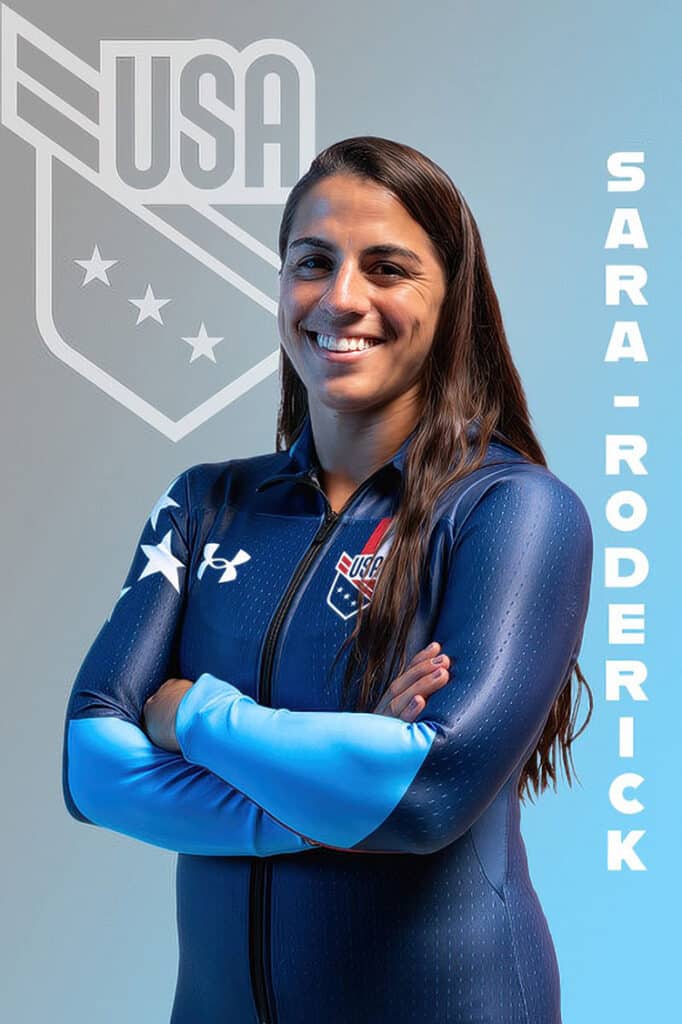
A skeleton run begins with a 50 meter sprint, the athlete exploding forward while pushing the heavy, 70 pound sled before diving onto the ice. From there it’s down to gravity, aerodynamics, and technical precision with subtle shifts of the knees, shoulders, and even toes. At the elite level, victory is measured in hundredths of a second.
Skeleton racer Sara Roderick’s happy place could not be further from the icy tracks where she spends so much of her time. She’s most at home walking Great Hollow Beach; taking the boat to Long Point with her family; or fondly reminiscing on summer fish fries and camp dances. As a fifth generation Cape Codder, she is intimately familiar with the healing properties of salt water and the inevitability of running into neighbors at the grocery store.
Sara is also familiar with the grit it takes to brave all four seasons, to work multiple jobs in the coldest months of winter. It’s that very hustle that motivates her to get up, get on her sled, and exceed highway speeds.
Sara first got into Skeleton at the encouragement of her Track and Field coach at the University of Vermont, who to this day writes her strength and conditioning program. Sports for her were always a constant, and she vividly remembers following the Women’s National Soccer Team. “I was fired up about how a team so overlooked could bring success to the U.S.,” she recalls. From that point on, the Olympics for Sara were an inevitable.
She has since competed in two World Cups and a World Championship, while also working off the track with high school students and aspiring athletes. Her training days are spent doing practice runs and strength training, honing her equipment and technology, analyzing the weather, and reviewing footage. “We might look like we’re just laying there,” she laughs, “but there are hours upon hours of preparation and decision-making that go into each race.”
Like any elite competitor, Sara’s career has had its highs and lows. “By far the hardest part for me is mindset,” says Sara, admitting she has yet to master it. “I’ve learned how to block out the noise and speak positively to myself,” reflects Sara, who began working with a Sports Psychologist this season who she credits for transforming her mentality.
2025 didn’t pan out the way she hoped, and some challenging races cost Sara her shot at the Milan Olympics. Still, setbacks haven’t defined Sara the way that learning from them have. She’s taken just as much from her challenges as she has from her triumphs, and that mindset she talks about just may be her greatest asset moving forward. After all, if it was supposed to be easy, athletes wouldn’t have to dive in headfirst.
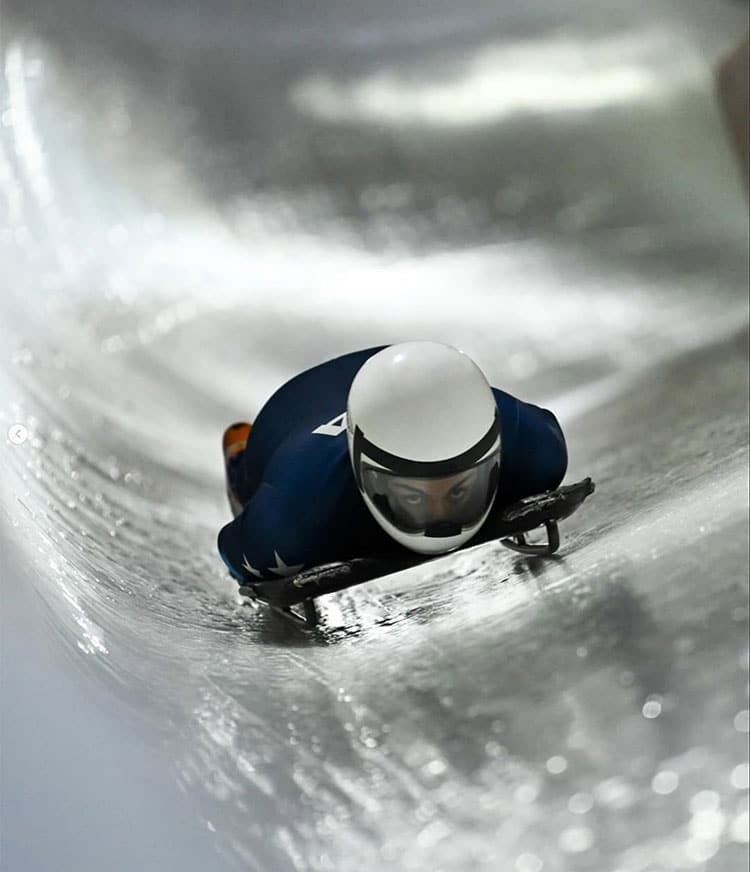

“Going through failure has been imperative to my outlook on sports performance,” she says. Her advice to aspiring athletes is hard-earned, and poignant: “Be brave. You will hear ‘No’ a thousand times. You will fail over and over again. It’s the getting back up that matters.”
As Sara’s season comes to a close, she looks forward to returning home—low tide strolls at Great Hollow and the quiet ritual of a Sunday dip in summer saltwater. Home grounds her. It reminds her not just why she climbs back onto the sled, but the community she uplifts with every turn, and what she’s chasing—headfirst, 90 miles an hour, at the end of the track.
Kip Diggs
By Greg O’Brien
Kip Diggs of Cotuit, a retired world boxing champion and now a state representative representing the 2nd Barnstable District, has lived a serpentine life with lots of ups and downs, twists, turns and trauma.
But that’s just part of the story.
As a welterweight boxer early on—two years as a Golden Glove amateur and ten years as a pro—Diggs, 59, had a record of 35–5, with several knockouts, and held the North American Boxing Federation title and the International Boxing Organization World Championship. A close friend, knowing of Diggs’ athletic prowess, encouraged him in his 20s to box. At 147 pounds and five-foot-nine (though Diggs insists “its nine and a half”), it turns out, that he had a powerful left hook, akin to boxing legend Joe Frazier. His trainer George Maddox taught him. Diggs retired in his early 30s after boxing nationally and worldwide.
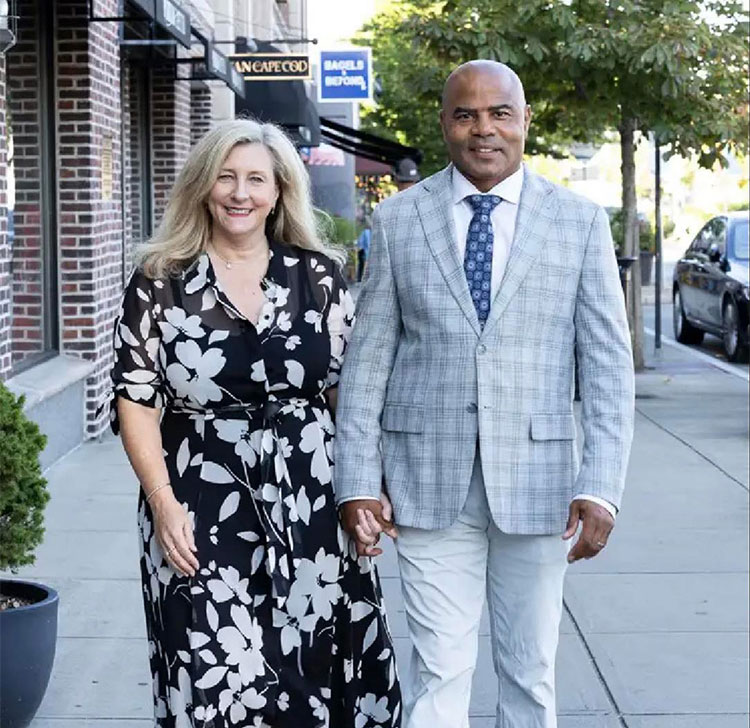
“I don’t miss it,” says Diggs, a proud father of three. His children from a previous marriage—Tanisha, Zeya and Kraig (spelling amalgamation of his uncle Craig)—are central to his life. His wife Tracy is his centerboard in his life, as have been his late father George, his late mother Deborah, sister Sharon, and brothers Joe and Craig, both artists. The family homestead is still in Osterville as it has been for three generations, dating back to the 1800s. Such history is reinforcing to Kip.
Before election to the Legislature, Diggs worked for the Town of Barnstable Department of Public Works, then created his own trucking company, called TopKat Enterprises, which, among others, worked on Boston’s Big Dig trucking dirt in his tractor trailers and a tri-axle. Earlier, he worked briefly for Delta Airlines in Washington, DC in customer service, but deeply missed Cape Cod and returned.
Looking back on his boxing career, Diggs says, “I just don’t want to get punched anymore. I was never knocked out in a boxing ring, but like everyone I have been knocked down in life. The punches I take now up at the State House are a lot softer. I bring my fight and dedication to serving my constituents.”
Now in his sixth year in the state legislature, Diggs is assistant vice chair of the powerful Ways and Means Committee and serves on the Joint Committee of Ways and Means. He also is on joint committees focusing on housing, healthcare financing, racial equity, civil rights, and inclusion. The assignments enable him to continue advocating for working families, seniors, veterans, and the most vulnerable in our Commonwealth, while focusing on Cape Cod’s unique growth challenges and the needs of local youth.
Among his many accomplishments at the state legislature, Diggs has brought home hundreds of thousands of dollars to the Cape to serve the fishing industry, police, firemen, community groups, and others. Diggs also serves as a member of the Massachusetts Black and Latino Legislative Caucus, which seeks to ensure the voices of black and Latino communities are heard on Beacon Hill and elsewhere.
Diggs, a graduate of Barnstable High School where he was captain of the hockey team, is proud of his legislative record. A strong focus for Diggs today is to instill hope and a sense of purpose with area youth. “That’s a top priority for me,” he says, noting the love of family, friends, and mentors has sustained him.
But there has been tremendous trauma in his life—great suffering that shaped his future, propelling him always to press on.
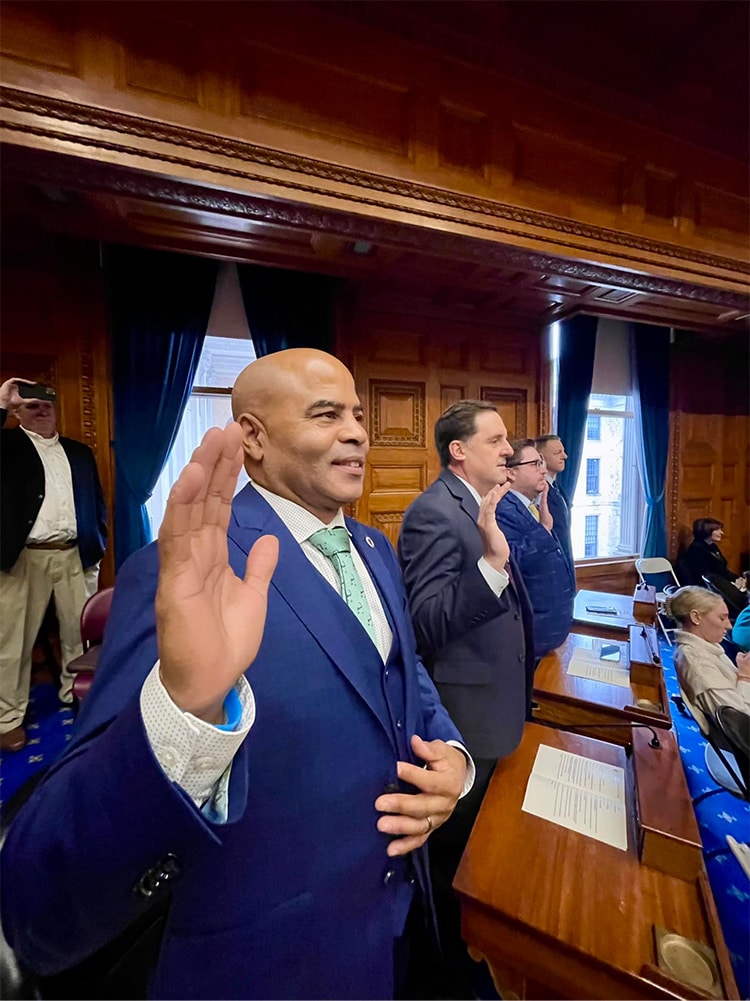
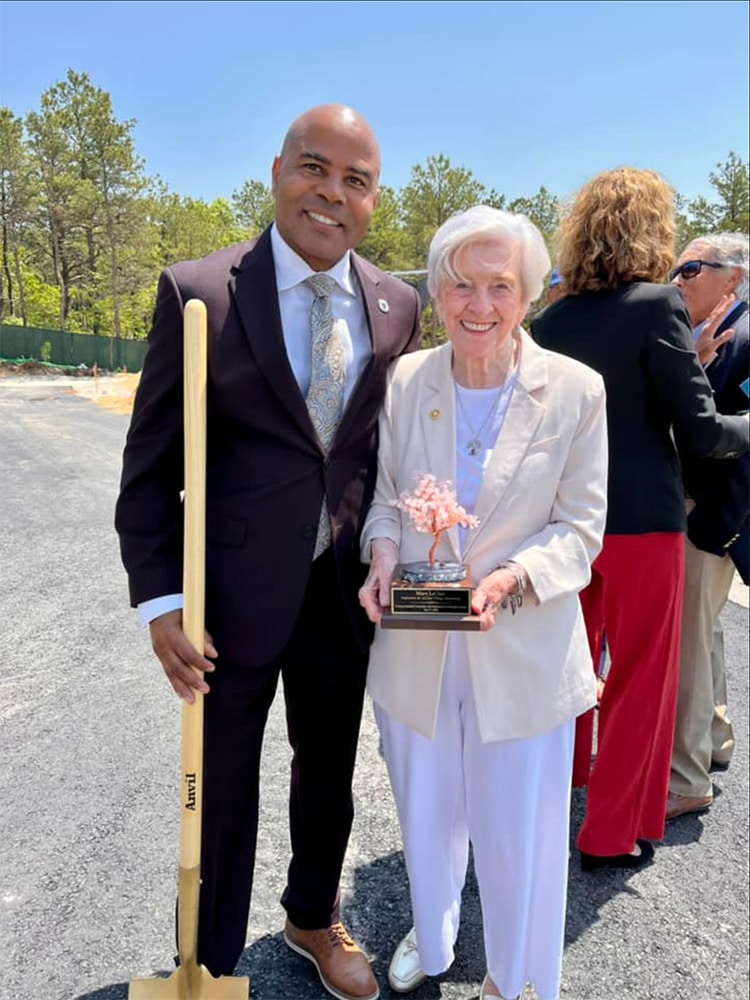
Tragedy first hit Diggs at age 12 when his brother Craig was killed on the Cape by a drunk driver. “You never get over this,” he says.
Then in 2016 the unthinkable happened. Says Diggs, “Our 20-year-old son Kraig was driving back to college with three friends when a drunk driver driving the wrong way on 495 in Middleborough crashed head-on into their car, killing all four…”
How do parents survive such loss? “The grace of God,” says Diggs, a man of strong faith.
“Life often isn’t fair,” he adds. “My community picked me and my family up with love and support, feeding us meals for three months. It was heartwarming! Made me think of what I could do to give back.”
And so the death of his son propelled him to serve and mentor others and to seek election to Beacon Hill to make
a difference.
And he has. It is the fight in Diggs that has sustained him. His son and brother would be proud.
Ashley Dufresne
By Leslie Hatton
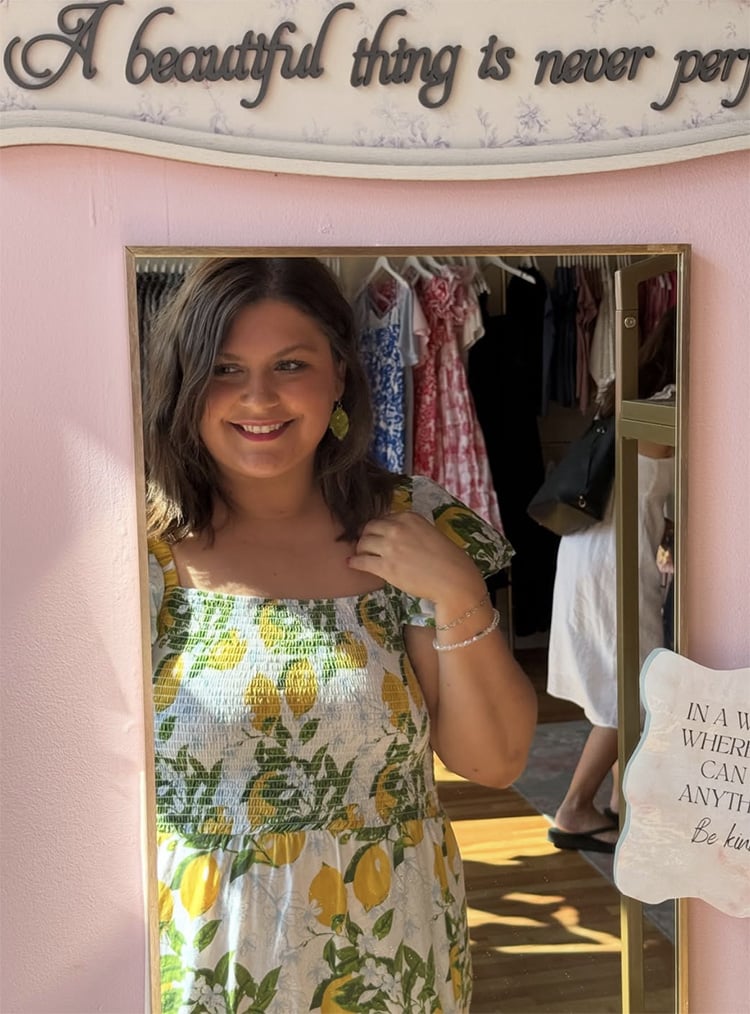
Before she set up shop in the Mashpee Commons, Ashley Dufresne would find herself driving through the quaint intersecting streets lined with welcoming storefronts and she would envision her brick-and-mortar business here. “It’s like a Hallmark movie here,” she beams.
Dufresne grew up in a small rural town in Vermont so the charming atmosphere and feeling of a close-knit community was something she was drawn to. After college she worked as a manager for the well-known women’s retail store Talbot’s, and when an opportunity came to relocate to Cape Cod, she and her husband seized it.
The position allowed for Dufresne to hone her skills in all the many facets of retail, but the longing to help others and open her own store began to pull at her. “I’ve been plus-size most of my life and I had always struggled with finding the right clothes, specifically on Cape,” she shares. She found it challenging to find a place where she would be ensured of finding something that would be age-appropriate, stylish and fit well. “I was really good at dressing body shapes at work, and I knew it was a niche talent. I thought that if I could ever take that skill and open a size-inclusive boutique that I could create both a positive atmosphere but also have the knowledge and skillset behind knowing how to dress,” she says.
With support from her family and friends and a dose of bravery, Dufresne left her job, started an LLC with the help of EforAll—a nonprofit organization on Cape Cod dedicated to helping local entrepreneurs launch and grow business through mentorship and training—and created the first iteration of the boutique that bears her name out of her guest bedroom. “I went to the garment district in New York City and just walked up and down and started to source pieces that in the beginning, only my family and friends were purchasing,” she shares.
But it wasn’t long before her website, which helps shows women how to select a specific body shape to shop accordingly, gained in popularity. She won an entrepreneurial contest through EforAll where the prize was six months to test run a small business in a 300 square foot space in, of all places, the Mashpee Commons. That was over six years ago, and like the song from the 70s-80s sitcom The Jeffersons, the size inclusive Ashley Irene Boutique has “moved on up,” relocating to a treasured spot smack dab in the center of the Commons where she has created a deeply devoted customer base.
When she heads to shows to source pieces for her boutique she says, “I’m looking for pieces that fit different bodies and shapes. When I first opened, I sold tulle skirts and denim jackets, and some people said those pieces wouldn’t sell. But they are our best sellers. There are many customers who live on the Cape year-round and are looking for styles that go beyond traditional striped or classic Cape Cod looks. They want unique, everyday pieces that feel current and wearable, without the high price point often associated with tourist-focused shopping.”
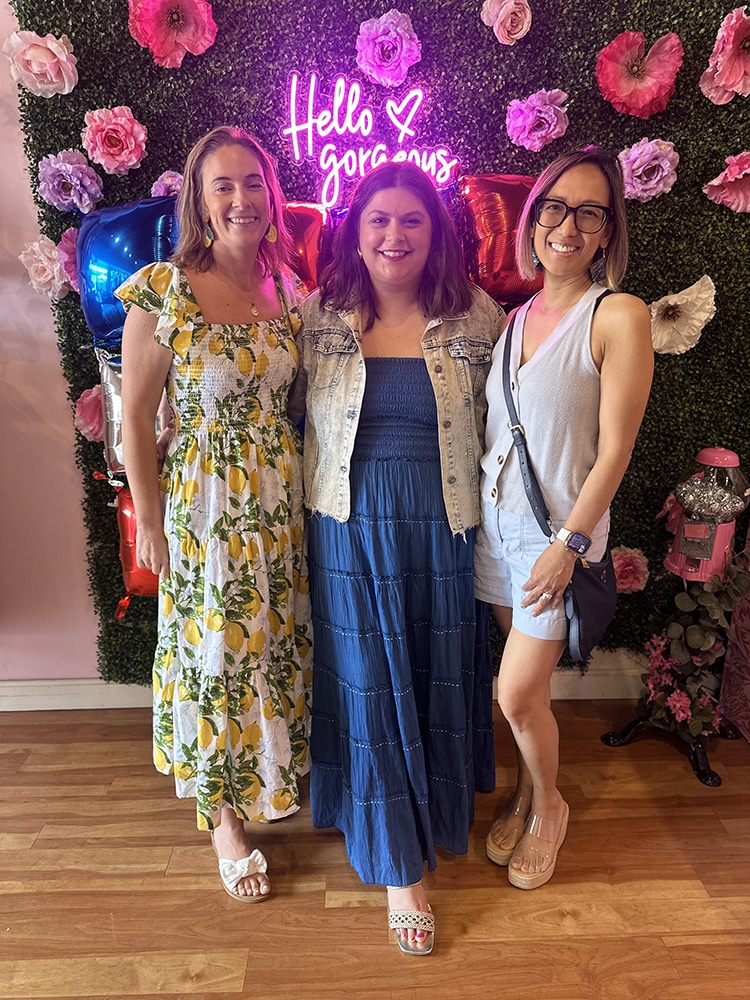
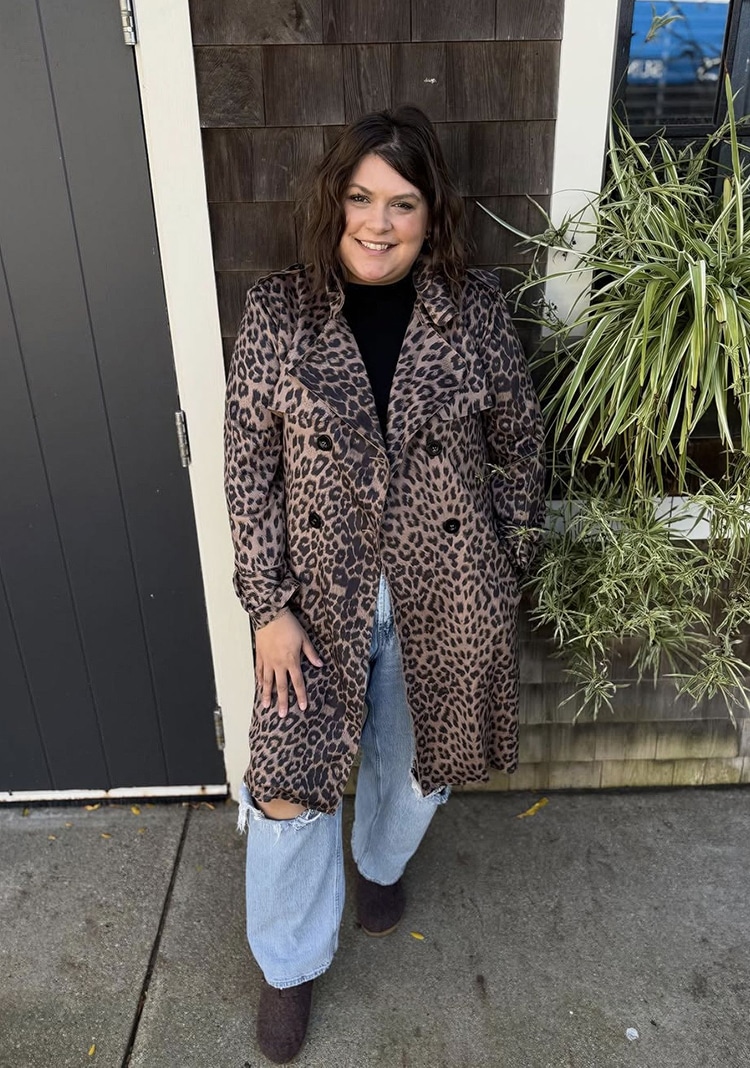
At the core of her business philosophy is a desire to help others—not only her customers in looking and feeling their best but also lending support to other small businesses. One of her first pop-up experiences was at Cape Cod Nail Co., another woman-owned business in Mashpee, which helped spark early buzz for Ashley Irene Boutique. In turn now she’s happy to collaborate and host pop-ups for new businesses coming up in the local retail ranks. “I’m not a competitive person by nature so I don’t have that mentality. I feel like when one of us wins, we all win,” she says.
With an attitude of humility and gratitude, she adds, “I had no idea that it would come to this. People go out of their way to shop here, whether they are vacationing or if they live here. I feel extremely lucky and loved.”
Check out Ashley Irene Boutique at 5 Central Square in the Mashpee Commons and online at ashleyireneboutique.com.
Mike LeBrun
By Matt Nilsson
Working across generations, ensuring that families are putting their loved ones in the best care possible, is the core of Mike LeBrun’s professional career. For the past twenty years, his work has been focused on helping Cape Cod families provide the best care possible for their aging family members through his work at Cape Cod Senior Residences (CCSR) in Bourne.
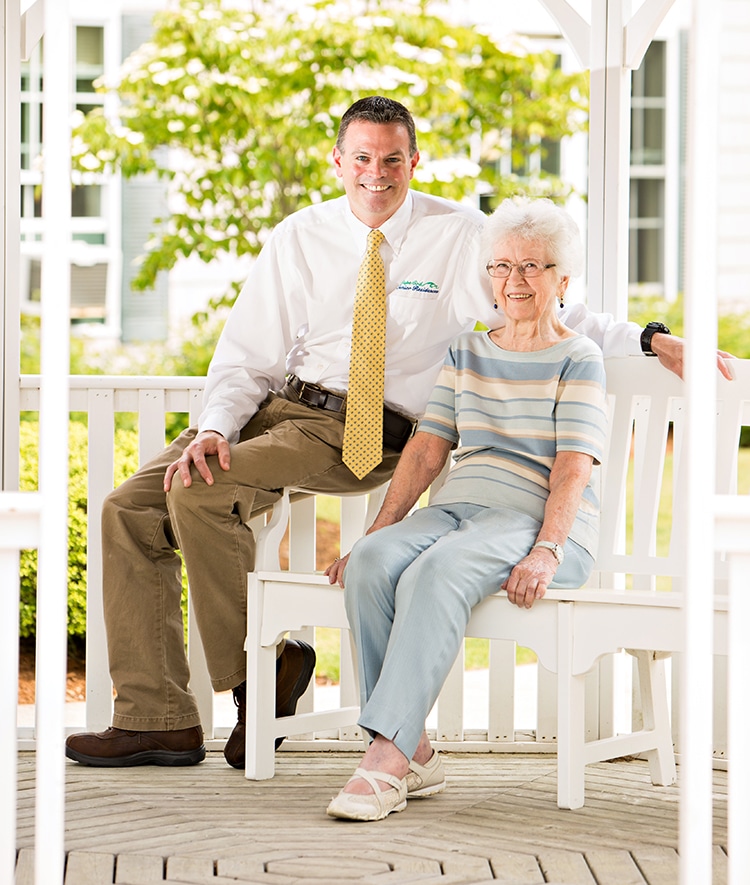
From a young age LeBrun knew the challenges of finding the right living situation for seniors on the Cape. Born and raised in Bourne, he watched his mother sacrifice to ensure that his grandmother was well looked after. “My parents initially took her in, and they eventually moved her into a nursing home which was very difficult for my Mom,” he recalls. “However, nowadays families can come into an environment like what we provide at Cape Cod Senior Residences and it makes a huge difference in their quality of life.”
After college LeBrun and his wife, a Falmouth native, found themselves living off Cape where Mike worked in marketing and admissions at private boarding academies in Vermont and Massachusetts. In this environment he saw the familial roles reversed. Parents were looking for the right place to send their children to take their first steps out in the world away from the home.
“I saw these parents feeling guilty, asking questions like ‘Are we doing the right thing?’ and ‘Can we trust these people to do the right thing?’” he says. “With senior living it’s the opposite. Now it’s the kids asking the same questions of us on behalf of their parents.”
When it was time to start a family of his own LeBrun and his wife came back to the Cape to be surrounded by their kin. His in-laws gave them a plot of land next to their home in Falmouth where the couple built the home they would raise their children in and where they still reside today.
Upon his return to Cape Cod he landed a job as Executive Director at CCSR and has been there ever since. “I joined 6 months after they opened and get to work with care staff that have been there just as long,” he says. “To have compassionate and dedicated people that are committed to our mission of promoting a sense of purpose and wellbeing for our residents has always stood out to me.” It’s no surprise then that Cape Cod Senior Residences, professionally managed by Senior Living Residences, has ranked number one in Massachusetts by the Boston Globe, thirty-first in the nation by USA Today, and are Great Place to Work® certified. The community is supported by a warm, attentive staff, delicious meals, and a diverse mix of engaging activities—ranging from fitness and games to themed celebrations (who says the prom is just for teens?). Combine the fun along with helpful and frequent communication that helps the residents feel comfortable, secure, and truly at home and you’ll see why there’s a special recipe for success at CCSR that begins at the top.
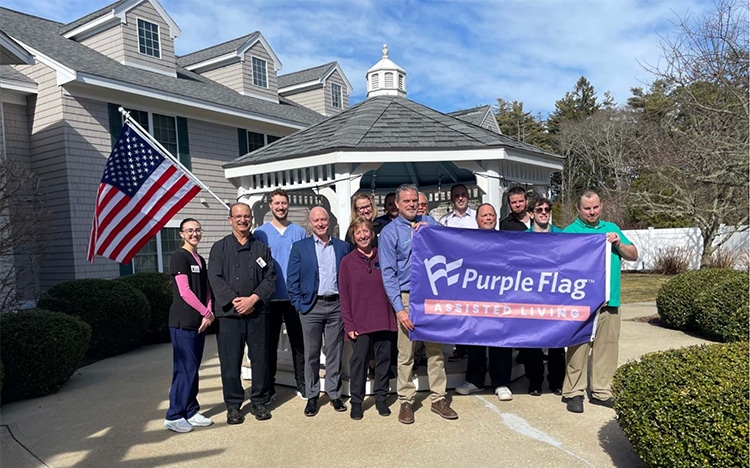
Facilities like Cape Cod Senior Residences play a vital role in supporting the Cape’s aging population, opening up options for families looking for the best care for their older loved ones in a region where affordable housing is hard to come by. Residents can choose between independent and assisted living—ensuring that they have the amenities that suit their lifestyle alongside world-class care—and LeBrun has worked diligently to ensure that they can accept Medicaid in addition to their own home-brewed programs.
One thing that he has in common with the residents and staff at Cape Cod Senior Living is a deep love of the Cape. Like him, many were born and raised here while others chose the location to be closer to their family. For others, the Cape was their cherished getaway.
“Just being here and enjoying living on the Cape has always been a passion of mine,” he adds, “And being embedded in the community is what keeps me here.”
Visit seniorlivingresidences.com to learn more as well as take a virtual tour or schedule an in-person visit.
Gretchen Swarr

By Marie Spadaro
How do you plan your vacations? Do you keep a bucket list of destinations, or think about the places you want your family to see?
Or do you think to yourself, “Well, I’ve always wanted to go to the Antarctic, so I think I’ll sign up for an ultramarathon to give myself an excuse?”
If you’re Gretchen Swarr, you do all of those things, because you’ve learned over the course of your life that adventure is out there if you’re willing to make the effort. A Sandwich resident and 15-year WHOI employee, Gretchen has compiled an impressive list of racing accomplishments, including a Guinness World Record for “fastest female marathoner dressed as a chef.” Along the way, she’s developed a combination of training, traveling, and racing that allows her to make time for herself and her family, and give her daughter the kinds of travel experiences she felt lucky to have as a child.
Born in Boston, Gretchen lived in the city as a very young child, before her family moved first to Winchester and then Connecticut, where she competed as a sprinter on her high school track team. After graduation, she attended Colgate University in Upstate New York. It was at Colgate that she first developed an interest in geology and ocean science after taking a class during her junior year. The professor who taught the class was amazing, and it was super interesting,” she says. After graduation, she stayed on at Colgate to help that professor set up a new lab, and what was meant to be a summer job lasted three years.
As part of her job, Gretchen learned to use a mass spectrometer, and when a scientist at WHOI wanted to acquire one, she had the right experience. Gretchen describes the pattern of her career as “happenstance,” but it would be equally accurate to say that she simply made a habit of saying yes to the opportunities that presented themselves. Fifteen years later, she still loves working in a place full of “really smart people working on really interesting science.”
Although she was a high school runner and remembered watching her father and brother in the Boston Marathon, Gretchen did not become a distance runner until she was at Colgate. She started noticing that she was feeling out of shape and having a hard time with stairs (although she did not know it at the time, she was also dealing with the effects of an undiagnosed thyroid issue). The woman she worked for was planning to run a half-marathon along with some other members of the Geology Department and encouraged Gretchen to join them. As she recalls, “I went to the track and ran a half mile, and I was winded. I thought, how am I going to do this 26 more times?”
Despite those misgivings, she finished, and felt like she’d made a respectable effort. Her coworker qualified for the Boston Marathon, which she said, “added to the little nugget in my head.” Gretchen ran her first full marathon in the spring of 2011, and it was during her training for that race that she met her husband, who was training for a half Ironman. For their third date, they ran a half marathon together. The two of them trained for the 2013 Lake Placid Ironman while planning their wedding, a combination she does not recommend.
Gretchen continued to do mostly triathlons until her daughter was born in 2015. She switched back to marathons because the training was easier to manage while juggling childcare and her job. Now, she often runs at 4:00 in the morning, before anyone else is awake. It sounds like a sacrifice, but allows her time for herself without sacrificing family time. And that training is necessary, because Gretchen is almost always preparing for a race. Her efforts have led her to complete six of the World Marathon Majors (Tokyo, Boston, London, Berlin, Chicago and New York City). She has traveled to all seven continents but her next goal is to run a marathon on each of them. If you’re keeping track, she did run the Adelaide Marathon in Australia but since then, Sydney has been added to the World Marathon Major list. She recently ran (and won) the Antarctic Ice Ultra. And at Christmas she was able to fulfill her daughter’s dream of visiting the Everglades while also taking on the Dopey Challenge (a 5K,10K, half-marathon and marathon in four days) at Disney World.
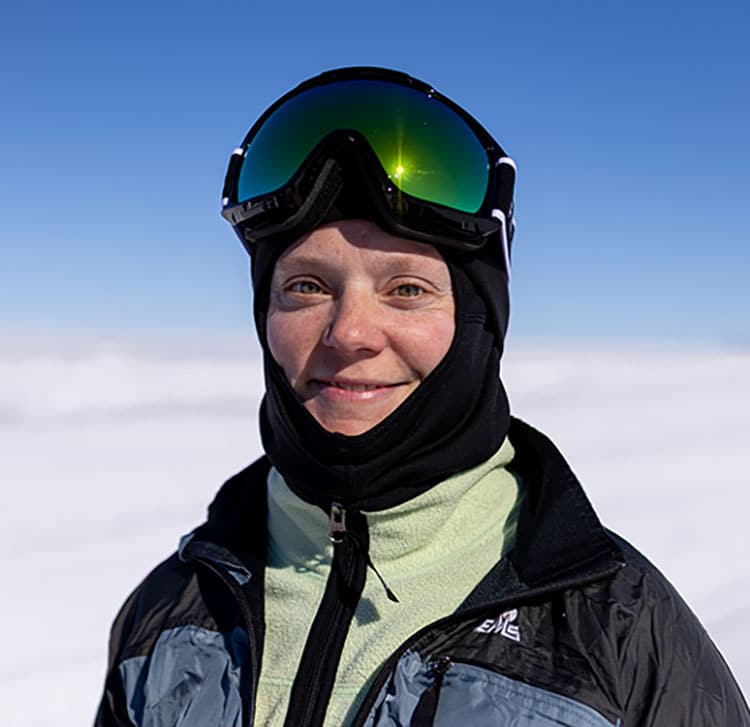
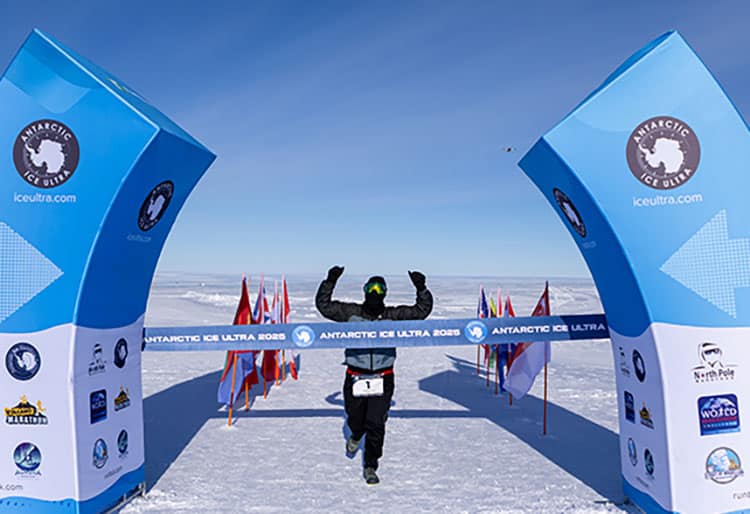
The Toronto Marathon in 2024 might be one of her most memorable, because she ran it in a chef costume, carrying a 3kg frying pan. And she didn’t just set the record; she did it just months after a bad bike accident left her with a concussion significant enough to require intensive rehabilitation. She had lost, she says, “a considerable amount of fitness and speed,” which made her success that much more gratifying.
Gretchen has no plans to stop, even after checking so many goals off her list. South America and Africa are on her list, because they are places she wants to travel with her family, as well as complete marathons on seven continents. And while she has no current plan for a race in China, her daughter has said that she would love to see pandas in the wild. In running— as in her career—Gretchen has made a habit of saying yes to unexpected opportunities and embracing the experiences that have resulted. Even if you have no intention—or desire—to run a marathon yourself, we can all learn from Gretchen’s example that saying yes can lead us down a path of adventure we never expected.
Luke Lomeland
By Chris White
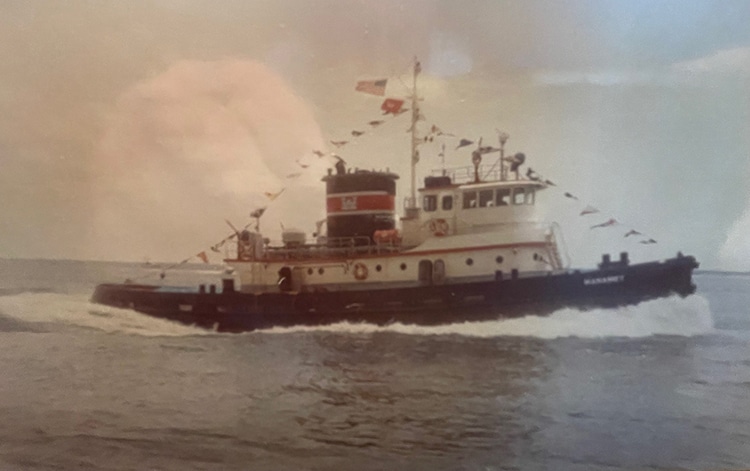
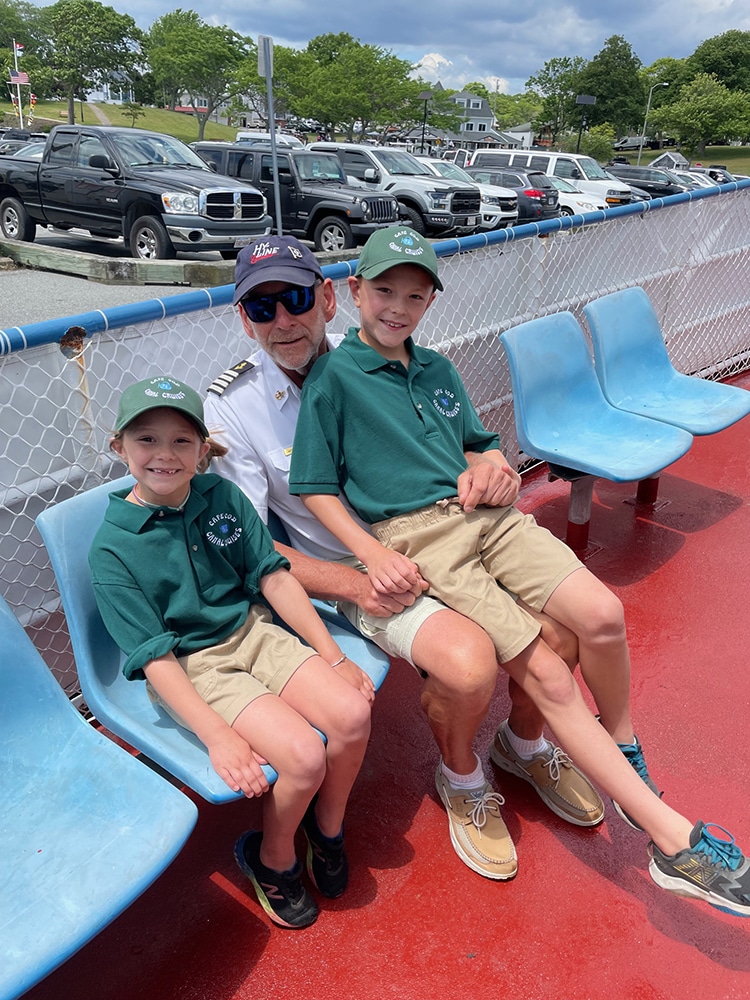
Captain Luke Lomeland reckons he could hold the Guinness Book of World Records’ distinction for the most amount of trips through the Cape Cod Canal, where he first began operating vessels in 1985. But he started working on boats even before that. “I was in the Coast Guard right out of high school for four years from 1973-77,” he says. “I got my Coast Guard license and have been running boats ever since.” He retired from US Army Corps of Engineers in 2011 after serving for 30 years as a captain and marine traffic controller, but he still works the canal during the summer, when he runs the Monhegan, the area’s only sightseeing cruise vessel. He also works as a fill-in captain on the Cormorant, the ferry between Woods Hole and Naushon Island.
Lomeland began his career with the ACOE in a small craft, patrolling the canal, then earned a promotion to Tug Master in 1986. He spent most of the next 25 years covering this seven-mile stretch of water, aboard the Manamet (not to be confused with the town of Manomet). “She was a rescue tug,” he explains. “But she’s no longer in operation. The government contracted her out after I retired.” In the rescue capacity, Lomeland would assist disabled tugs, barges, and ships. Sometimes this included fire fighting. “She was also a Lloyds of London Class A Icebreaker,” he says. “Double skinned in the bow. She could break about one foot of ice.”
Over his thirty years, Lomeland assisted countless vessels, but fortunately many of the situations were relatively minor. “Rescue means life and death, and that didn’t happen very often,” he says. “Most of the time we would make a situation static until we could get better resources in. But the mariners community was glad we were always around. We had a tug crew there 16 out of 24 hours, seven days a week. It was sort of like a fire house.”
One of the trickier incidents that Lomeland assisted was when another tug and barge lost steering. He says, “They came to a stop right under the railroad bridge. It was a loaded barge carrying oil—a pretty big deal at the time. If it had hit the rocks, it would have been catastrophic, especially in terms of the environmental costs.” Fortunately, the situation developed close to the office, and Lomeland recalls, “We were there in ten minutes.”
For Lomeland, the sea and boats were in his blood. For at least three generations, his family has made their livelihood on the ocean. “I’m a first generation American,” he says. “We’re Norwegians. My grandfather immigrated here and fished out of New Bedford. My father was also a commercial fisherman.” Lomeland currently lives in Wareham, though he called Marion home for many years. He has served on the Marine Advisory Committee there, and he continues to gather with mariners at the Marion General Store for an “old sailors group.”
Although much of his work took place in the canal, Lomeland’s job had a number of different facets. Under a FEMA contract, he was a first responder at 9-11, operating patrol boats for three weeks. “We were ferrying people out,” he recalls. Then, after Hurricane Katrina, he conducted quality control on the “blue roofs.” He also helped out after Hurricane Rita. In addition to assist and rescue, he operated the survey tug, Bourne. “We used side-scan sonar to survey the bottom,” says Lomeland. “And we surveyed from Maine down through Connecticut. If someone hit a rock that wasn’t on the chart, we’d go look for it.” The tug would also inspect dredging operations. These often take place in harbor entrances to ensure safe navigation, where the Bourne would double-check to see if the contractor was making it deep enough. He says, “It was pretty interesting work, not a 9-5 pushing paper. I was on boats all the time.”
John Sullivan
By Marie Spadaro
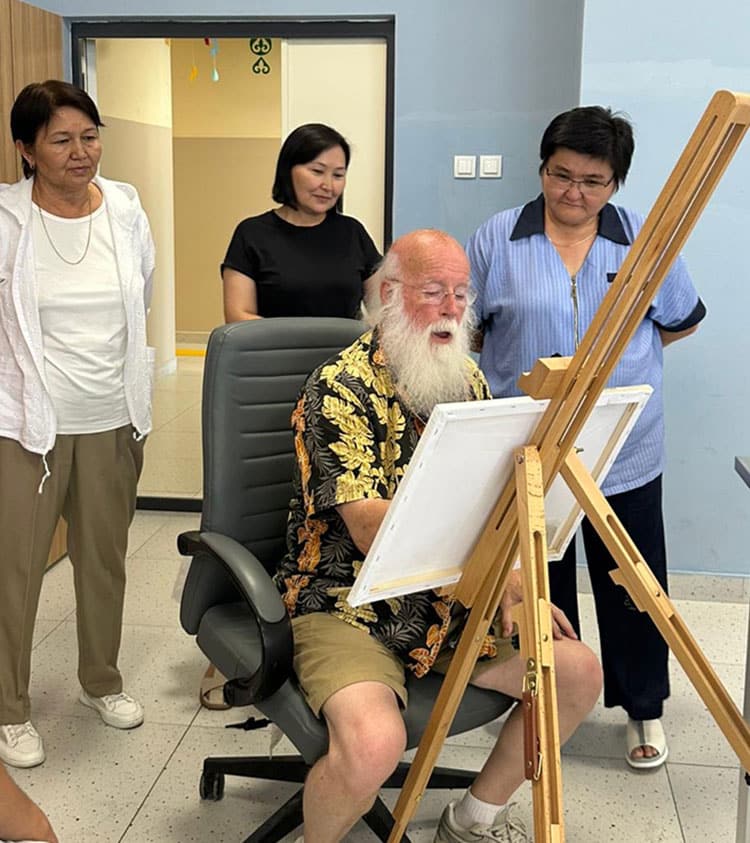
You may be familiar with the “six degrees of separation” hypothesis that suggests any one person can be connected to any other through no more than five intermediaries. If you have lived on Cape Cod and become involved in the fine and performing arts community any time in the last fifty years, you need look no further than John Sullivan to know that the theory holds true here. Illustrator, cartoonist, sculptor, filmmaker, director, performer and teacher, John’s influence can be traced locally, nationally, and internationally through the projects he’s contributed to and the generations of students he’s taught and mentored. His induction into the National Teachers Hall of Fame in 2004 is only one of the many honors bestowed upon him and the programs he ran at Barnstable High School.
If you weren’t lucky enough to be one of John’s students, you may still have felt his influence if you’ve been to the Enchanted Village in Hyannis at Christmastime, or attended one of the many events he’s been a part of in his role as Santa Claus (a role he also played on a national ad for the NFL). It’s also possible that you’ve been to a store or restaurant staffed by one of the many J-1 international students he hosts over the summers. It was in this role that he traveled to Kazakhstan to see one of those students graduate medical school at the top of his class, and to accept the appreciation of the nation’s vice president for his support of international students.
Although John is not a Cape Cod native (he grew up in Chelsea, attended St. John’s Prep and then Mass College of Art), he has been here since the mid-1970s. His Cape Cod career began at Cotton Pickin’ Tees, where he was an artist/illustrator. Trained as an art teacher, a friend mentioned that Barnstable High School had an opening. He joined the faculty in 1978 and launched an arts revolution.
John’s enthusiasm for his work and commitment to his students led to the launch of the Barnstable High School Drama Club Haunted House in 1980. John worked with writers and composers to create new shows and restage classics, often with casts of more than one hundred performers and orchestras made up of both high school music students and local professionals. He was instrumental in the design of the Performing Arts Center at Barnstable High School that has increased local performance opportunities for students and community members, and hosted touring productions from around the country.
As if all this were not enough, John’s students have gone on to work across the spectrum of the arts. Actor Neal McDonough, who rose to fame for his role in HBO’s Band of Brothers was, as Sullivan recalls, “the first freshman ever cast in a leading role.” More recently, John taught Siobhan Magnus of American Idol fame (profiled in CCL in August of 2015). EMMY award-winning producer John M. Best is a former Sullivan student, as is Andrew Rapo, whose work with Sullivan inspired him to pursue a career in digital design that included time at Disney, Warner Brothers, and Hasbro.
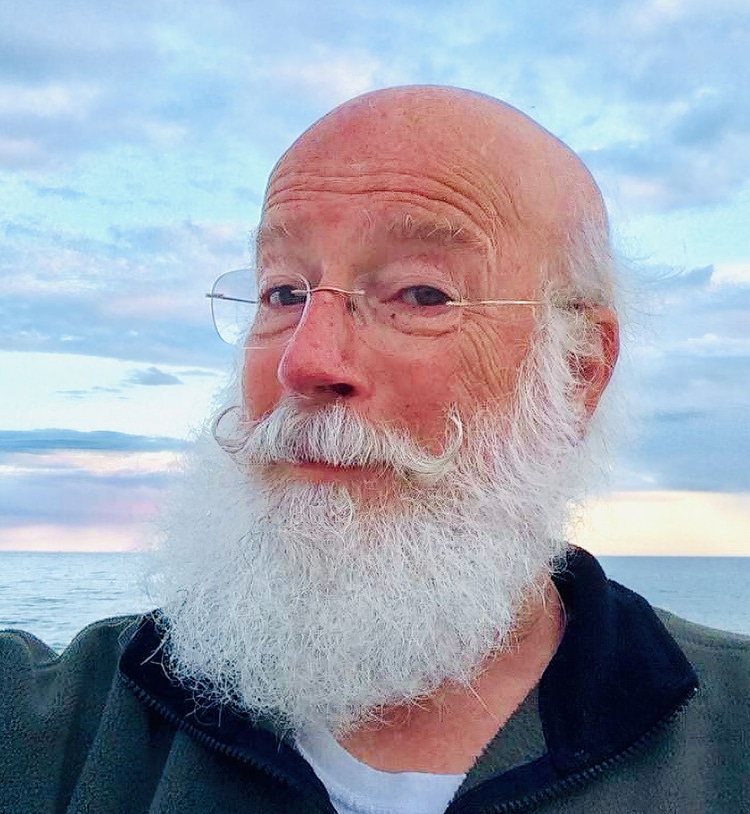
John left Barnstable briefly for California, where he studied at CalArts. As he put it, “No one at MassArt was doing animation at the time, and I thought my skills could be better.” His work earned him recognition, and after he returned, he got a call from John Luskin at ILM (Industrial Light & Magic) offering him the opportunity to return and work on the dinosaurs for Jurassic Park. When he turned it down, he said, Luskin told him he would miss “the opportunity of a lifetime.” But Sullivan replied, “I probably am, but I’d rather be where I’m happy.” He took several students to see the film when it came to theaters, and he admits that the work was amazing. But when he thought about what the process of getting those dinosaurs on the screen, only one word came to mind: “Tedious.”
Although he is no longer teaching, John still works with young people, because he hosts international students each year when they arrive through the J-1 visa program to work in local businesses. He’s not responsible for their education, but he does provide practical advice and assistance with everything from cooking and cleaning to transportation and relationship advice. One of those students recently came back to the U.S. on a student visa, and John was instrumental in helping him to pass his driving test.
In addition to his busy holiday schedule as Santa Claus, John makes time for art year-round. He is the creator of the “Pizza Shark,” and currently hard at work illustrating the fourth in a series of children’s books with author Linda Cronin. “The thing is,” he says, “they talk about people getting a second act. I thought I would just be at home with the dog, working in the garden, but . . .”
When you spend time with John, and talk to him about all that he’s done in his life and career, it’s hard not to think of George Bailey, from It’s a Wonderful Life. George spent his life in Bedford Falls, never having all of the adventures he originally imagined. But we all agree with his brother Harry when he says at the film’s end, “Here’s to my brother George, the richest man in town.” It’s hard to imagine a life richer in experience and community than John Sullivan’s, or a community more enriched by one person’s work than ours.
Bert and John Jacobs
By Chris White
For brothers and co-founders of the American lifestyle brand Life Is Good, Bert and John Jacobs, the Cape has always been more than a place—it’s helped to shape their brand.
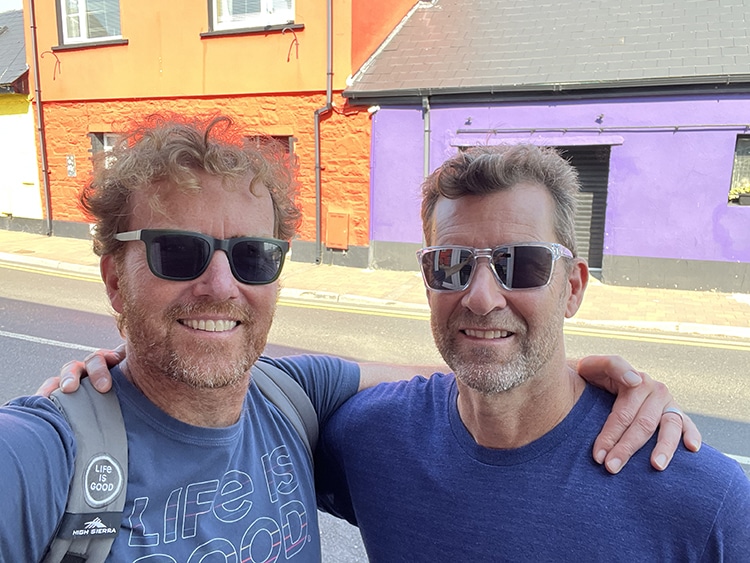
“Bert and I have had a lot of fun on the Cape,” John shares, “and its spirit is definitely woven into the Life is Good brand. Once people get over those bridges, they tend to simplify and savor their time in a healthy way. When we were starting our business, sleeping in the van and selling in the streets and dorms for 5 years, we always looked for little ways to keep fun and humor at the forefront. Could be that we were shooting hoop, throwing a frisbee, or just cracking jokes about our latest pathetic sales effort. Laughter made nightly rejection easier to shake off.”
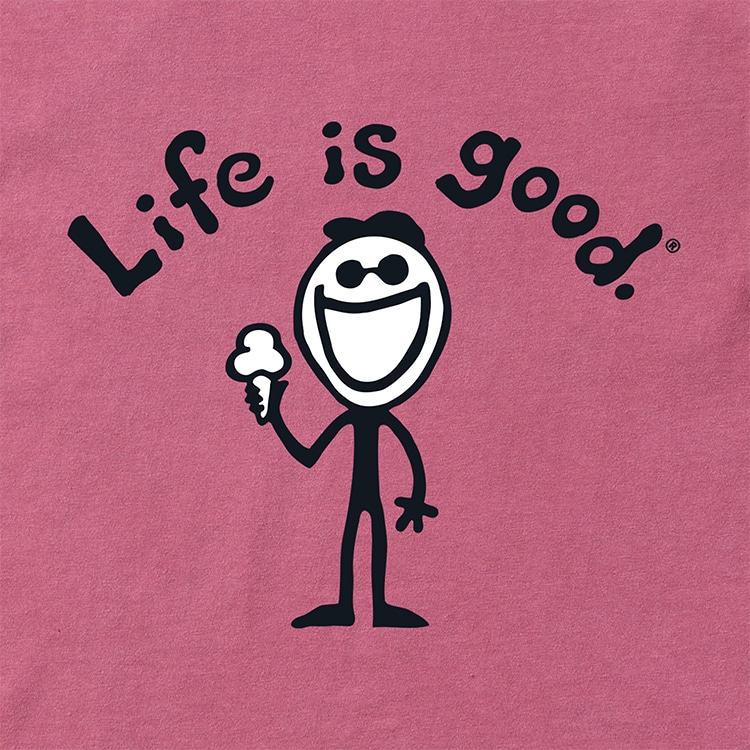
But in 1994 at a street fair, things began looking up. They sold out their first run of Life is Good (LIG) tees in an hour, and it was the catalyst the brothers needed to educate themselves on how retail stores operated. “Many of our earliest graphics celebrated simple pleasures— the ocean, beach, biking, kayaking—so naturally, we headed for the Cape to try and sell them. In fact, at one tiny Cape store, a woman asked us if Jake (the original LIG character) ate ice cream. We said, ‘No. But give us about an hour and he will.’”
Those early years for the Jacobs brothers were centered around learning about and listening to what consumers loved and then making art that would celebrate it. The business expanded, but along the way, so did its sense of purpose. “Our customers showed us the deeper meaning of Life is Good. Through chemotherapy, losing loved ones, and all kinds of adversity, people shared moving stories of how they managed to stay positive. They stoked not only a deeper level of gratitude for simple things like road trips, bike rides, or a dive in the ocean, but they also inspired us to create the Life is Good Playmaker Project, which teaches early childhood professionals how to help kids heal from trauma. It’s about spreading the power of optimism to young kids who need it most, and more than 10% of our annual net profits are donated to the Playmakers. There are now over 30,000 trained Playmakers across the United States reaching over 1 million kids each year.”
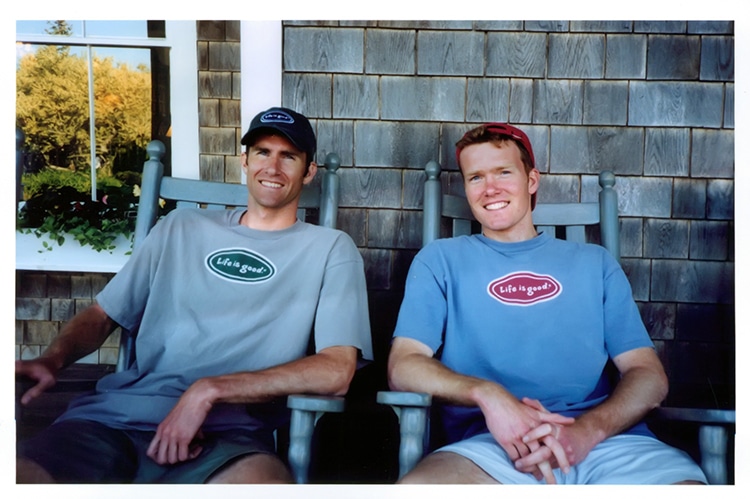
Bert and John were the youngest of six children, raised by an extraordinary mother named Joan who showed them just how important play can be. Despite navigating financial challenges and the everyday pressures of raising a family, she always made sure their home was full of joy and optimism. Whether it was drawing, singing, storytelling, or simply getting outside to move and explore nature, she made play a constant and meaningful part of the children’s lives. “When we think about time on the Cape—visiting friends, renting shacks, weddings, bringing little kids back, it’s all about good friends and family, non-stop laughter and simple play. Wiffleball, summer basketball tourneys, rides on The Rail Trail, body surfing, and all-day battles in every conceivable beach game,” John says with a smile.
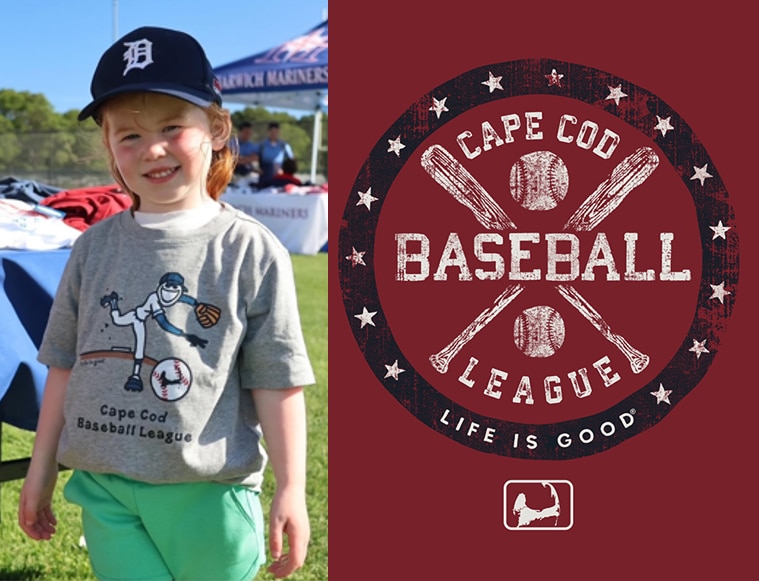
Celebrating a cherished Cape tradition, Life is Good has even partnered with the Cape Cod Baseball League to create co-branded tees for fans of its storied teams throughout the region. From family traditions on the Cape to collaborations that celebrate community, simplicity remains at the heart of everything the brand creates. John reflects, “These days, our art and product offerings and overall business are so much better, faster and more sophisticated thanks to an incredible team. At the same time, we all still recognize the power of simplicity to improve everything from tee messages to our customer experience. In our personal lives, we know the greatest days often have the fewest ingredients—like good games, great people, salt water, sand and sky. Fortunately, on the Cape, they’re all easy to come by.”