


A Life, Well-Aged
Cape Cod Home / Autumn 2026 / Home, Garden & Design
Writer: Julie Craven Wagner / Photographer: Dan Cutrona
A Life, Well-Aged
Cape Cod Home / Autumn 2026 / Home, Garden & Design
Writer: Julie Craven Wagner / Photographer: Dan Cutrona
At his Dennis Village home, vintner Joseph Carr has created a life layered with history, hospitality and the people he holds dear—proof that the richest things are those given time to mature.
Wine measures time differently than the rest of us.
In the vineyard, time is counted in seasons: the first tender shoots of spring, the long ripening days of summer, the expectant harvest of autumn. In the cellar, time extrapolates and slows further still. Months and years can pass while something once young and unformed develops character, complexity and depth. The impatient need not apply. Some things simply cannot be hurried.
Perhaps the same is true of a life.
At vintner Joseph Carr’s home in Dennis Village, time has left its mark in all the best ways. It is there in the weathered cedar shingles of the gambrel-roofed house, in antiques whose histories predate their current owner, in paintings collected from artists he has come to know, in bottles waiting patiently behind a hidden door and in the countless stories Carr can summon for seemingly every object in every room. Most of all, it is present in the memories of the woman with whom he created it all.
Carr, founder of Joseph Carr Wines and Josh Cellars—named the number one wine in America in 2024, and whose partnering with the Deutsch Family Wine & Spirits was instrumental in vaulting Josh Cellars to an international position—has spent much of his professional life understanding the elusive alchemy that can transform something promising into something extraordinary. His own life offers a compelling example.
Raised in an ordinary, blue-collar family in upstate New York, Carr was the son of a lumberjack, Army veteran and volunteer firefighter—his father whose name, Josh, would decades later grace one of the most recognizable wine labels in America. Carr’s path took him from restaurant work to the world of wine, first as a sommelier and later through an executive career that brought him into vineyards, cellars, restaurants and markets around the world. Eventually, he and his wife, Dee, took the considerably more frightening step of betting on themselves.
Josh Cellars began as a tribute to Carr’s father and grew into something neither Joe nor Dee could have reasonably imagined at the beginning. Yet success, when Carr speaks of it, rarely seems to be measured solely by cases sold, accolades received or the reach of the brand. His attention invariably turns to people: those who believed in him, those in whom he has believed, and those with whom he has been able to share the bounty that followed.
Maybe that is why his home feels less like a monument to success than a record of a life?
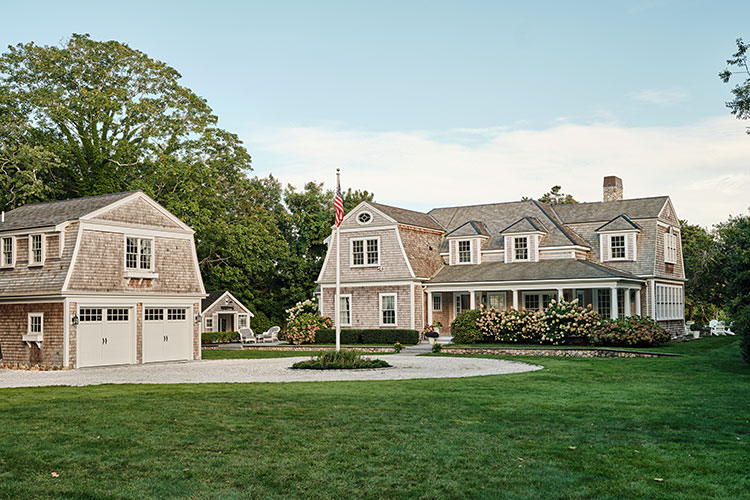
Tucked into a gentle curve along historic Route 6A, the property can almost be missed. The clamshell driveway is subtle, and the main house sits comfortably back from the road, accompanied by a carriage house positioned perpendicular to it. Both structures speak an unmistakably New England language: gambrel rooflines, silvered cedar shingles, white trim and working shutters finished with traditional shutter dogs. A circular drive sweeps toward a covered front porch.
But before visitors reach the house, they encounter something else.

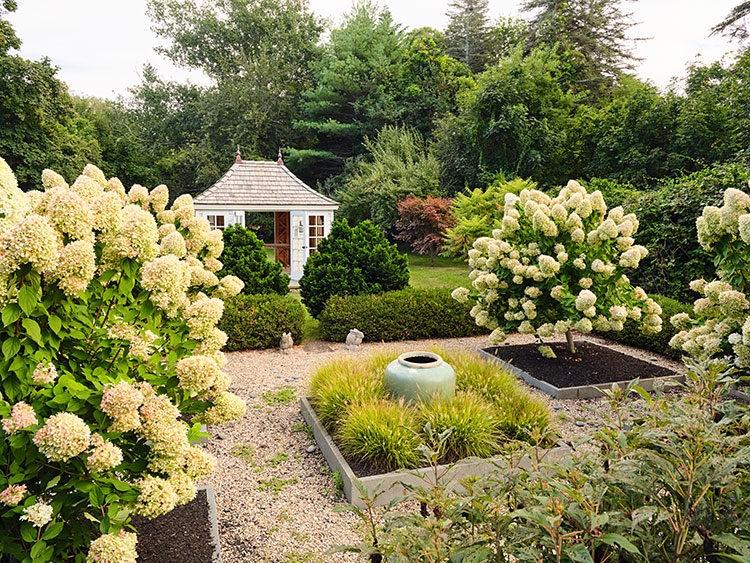
On the adjoining parcel, a meticulously crafted fieldstone wall announces a subtle change in the landscape. Beyond it lies a formal garden Carr conceived in memory of Dee, who died in 2018. with the help of landscaper Chris Hutton who has been caring for the property for close to 20 years, the space has become a living memorial.
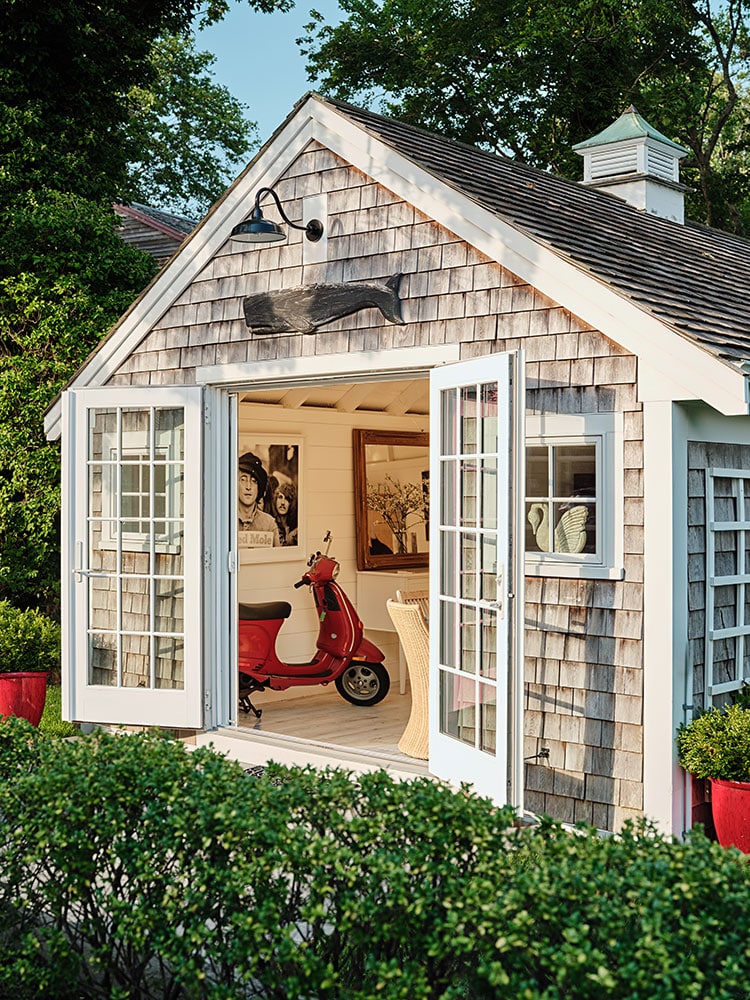
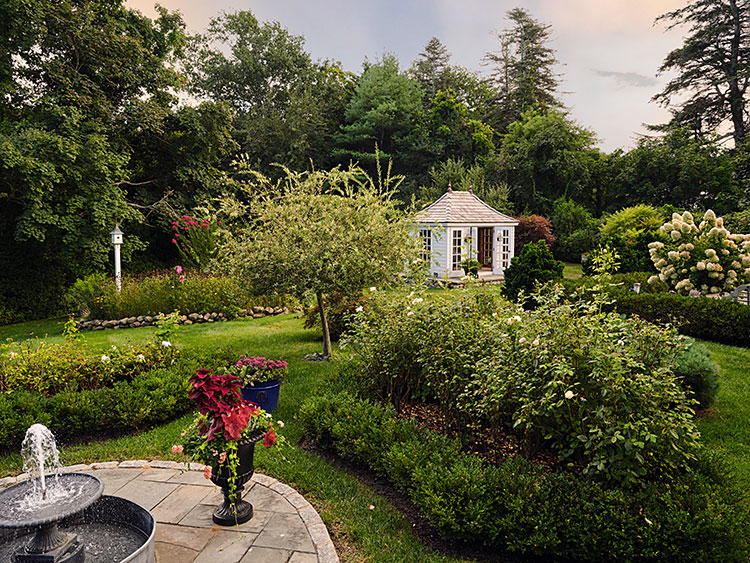
Symmetrical and English in spirit, the garden is defined by Limelight tree hydrangeas at its four corners, with orderly beds of lavender and boxwood creating structure within. A teahouse stands beyond, its doors flung open when weather permits and music drifting from a speaker inside. Nearby, a tiered fountain spills water into a pea-stone garden. Mature trees and an expanse of green lawn visually connect this quiet sanctuary with the house and the shores of Scargo Lake beyond.
It is not a somber place. It is alive—with water, fragrance, music, flowers and changing seasons. That seems fitting, because Dee is very much alive inside the house as well.
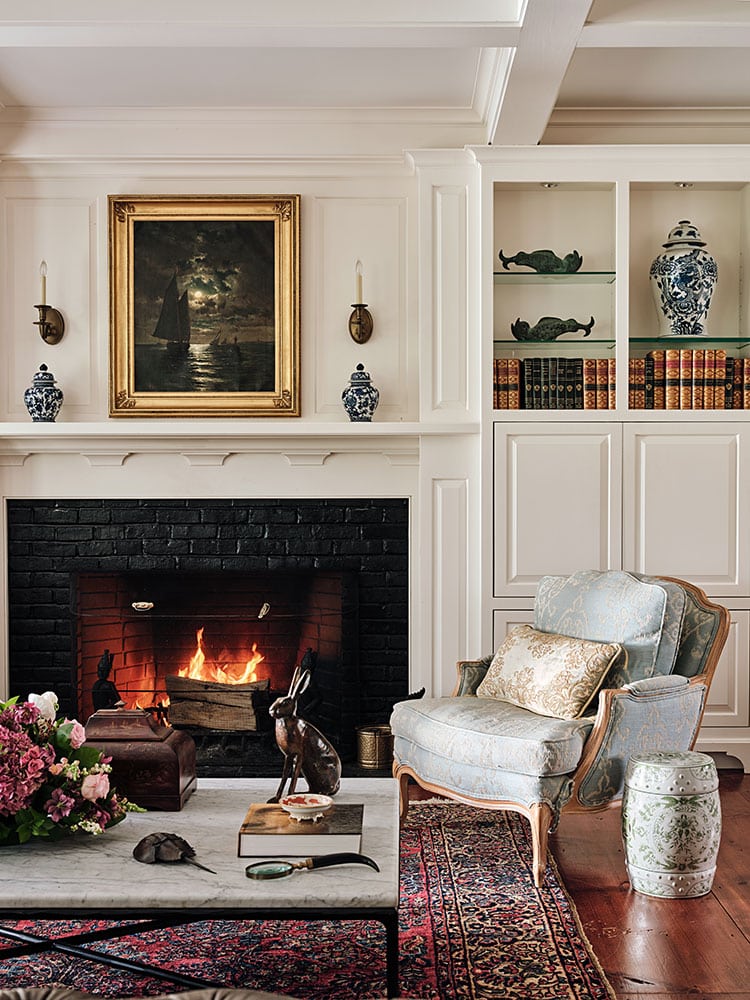
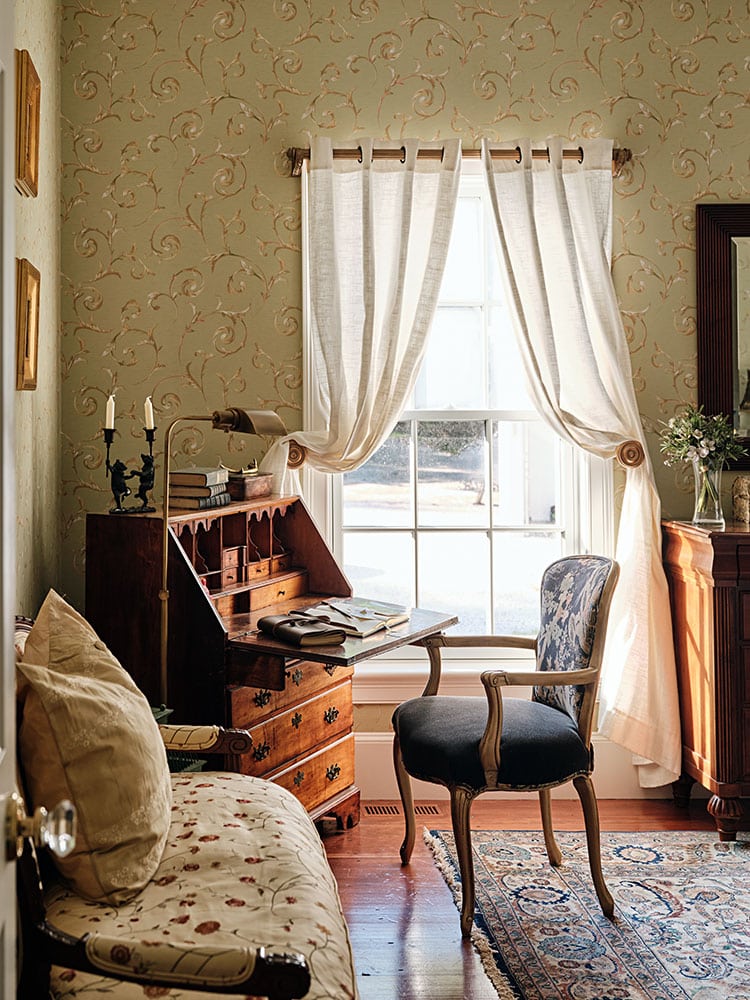
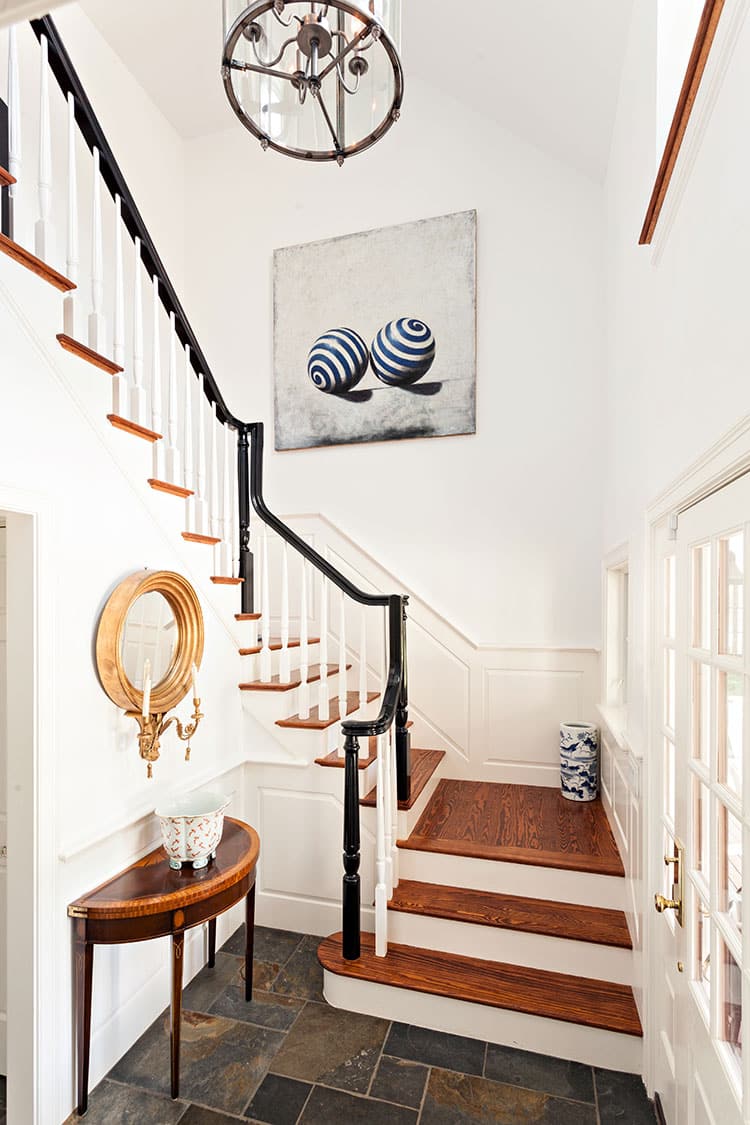
An accomplished antique “picker,” she had an eye for objects with history, and the home she and Joe created together is layered with them. Furnishings, paintings, rugs and tabletop pieces rarely exist simply because they fill a space attractively. Ask Carr about one, and chances are there is a story attached.
In this house, provenance matters.
That might be expected from a winemaker. The origin of something—the place it came from, the conditions under which it developed, the hands that shaped it—is fundamental to understanding its character. Carr and Dee seem to have approached their home in much the same way.
Local art is prominent, including works by Dennis artist Sarah Holl with her own generation roots in the iconic village. Rabbits appear with charming frequency in paintings, sculpture and decorative objects throughout the rooms. The recurring motif isn’t an interior-design conceit. “Bunny” was Joe and Dee’s pet name for one another.
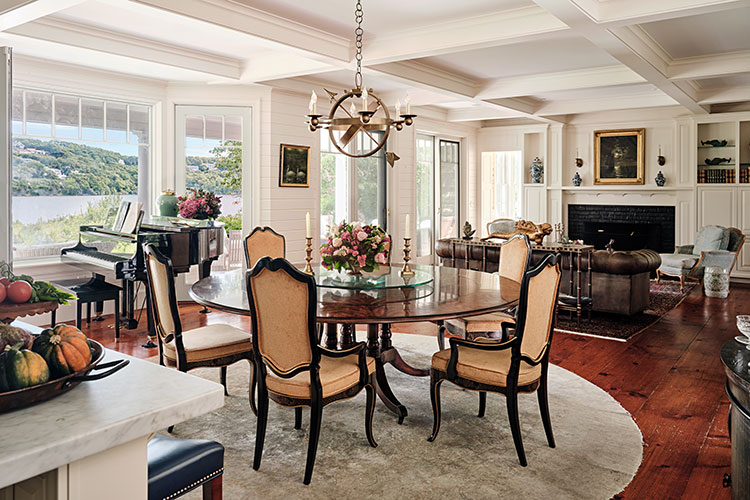
Then there is the large circular antique rug beneath the equally generous round dining table. The table itself was deliberately chosen by the couple because its shape encouraged conversation and intimacy among dinner guests. The rug arrived somewhat less deliberately.
Carr recalls being distracted during a visit to ABC Carpet & Home in New York when Dee discovered the piece and made what might generously be described as an impulsive—and expensive—purchase. Today, he recounts the episode with humor and gratitude, the eventual success of their fledgling wine company having softened the sting of the unexpected investment considerably.
It is exactly the sort of story that makes this house what it is.
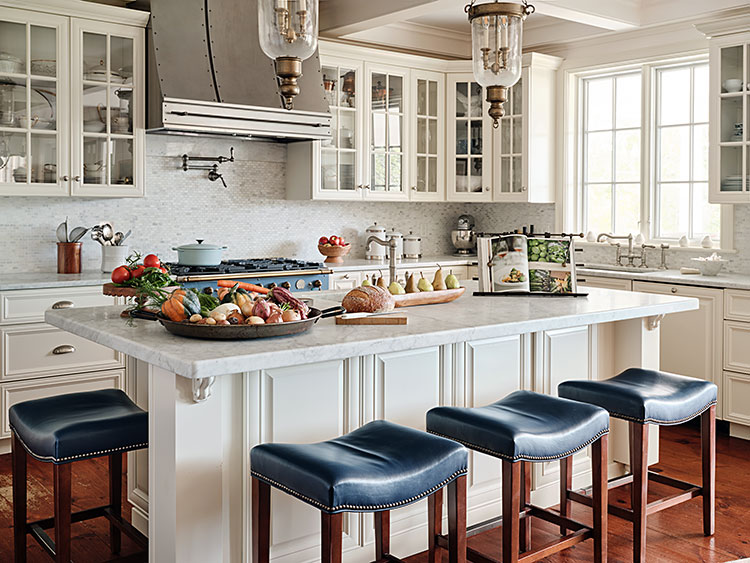
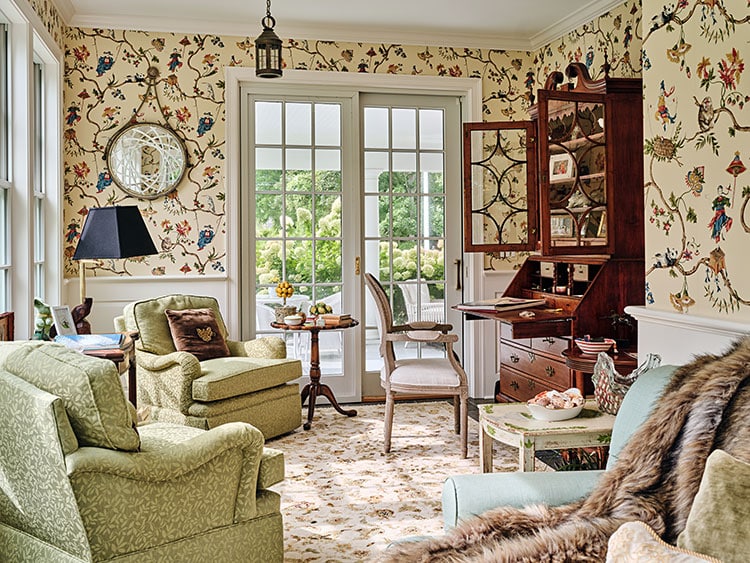
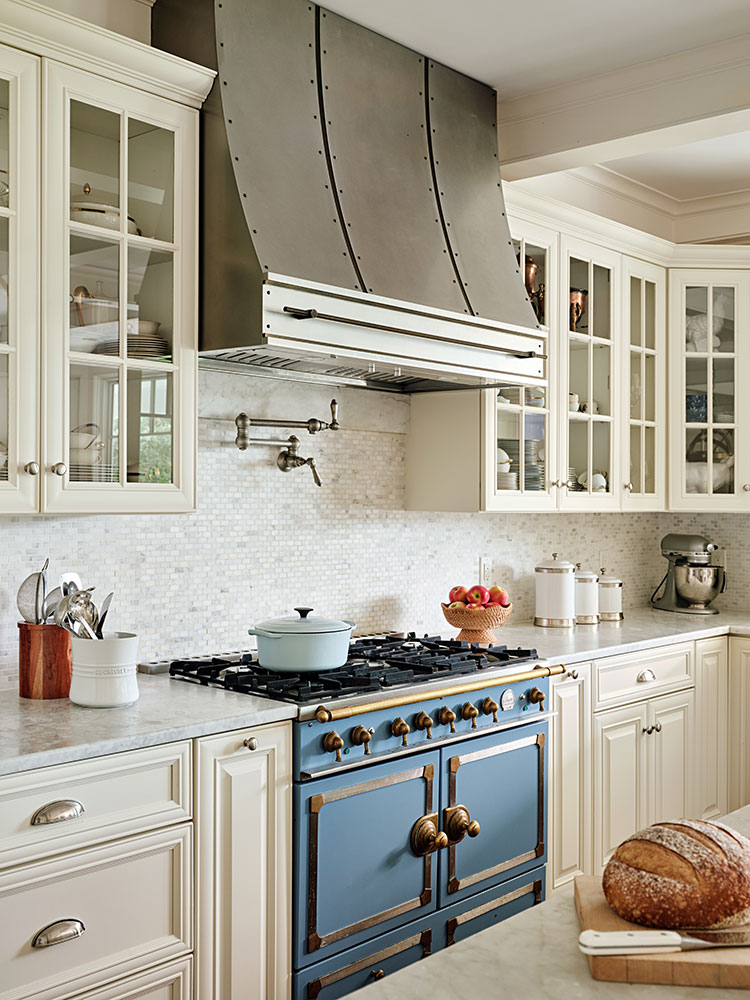
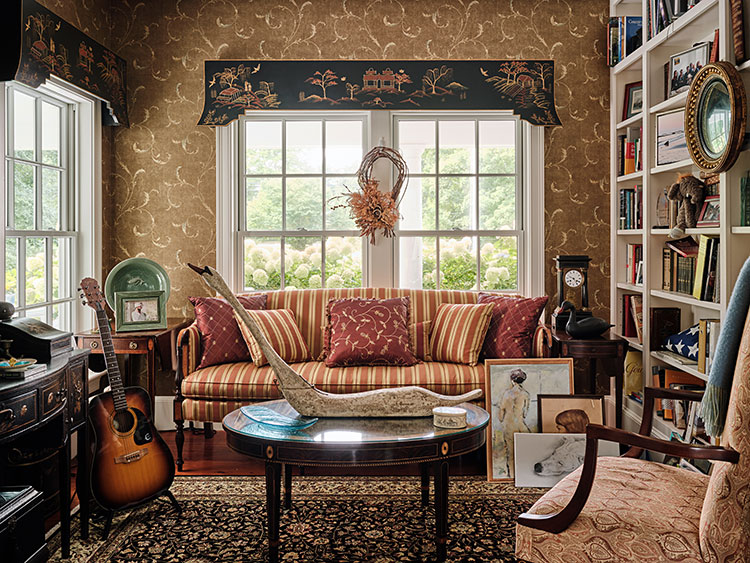
Even the wallpaper in the sunroom carries a tale. After a fire damaged the house, reproducing the carefully selected paper exactly proved impossible. A suitable substitute now graces the walls, but for the homeowner it is a reminder of things that can never be replaced when lost. In the kitchen, Carrara marble counters and a commanding La Cornue range reflect Joe and Dee’s preference for materials and objects chosen for quality and longevity rather than trend.
Nearby, a black-lacquered baby grand piano has a pedigree worthy of the room it occupies. Before arriving in Dennis, it lived at Tanglewood, where it served as a practice instrument for visiting performing musicians.
Almost nothing here simply occupies space. Everything seems to have arrived with a past.
The house itself was built by the late Jim Gable of Gable Construction in Chatham, a craftsman for whom Carr retains enormous respect. Joe and Dee largely conceived the way they wanted to live within it themselves, and the interiors unfolded not from a prescribed design scheme but from the accumulation of things they loved.
The result is traditional without feeling staged, sophisticated without losing warmth. It is a house that has been assembled rather than decorated. And above all, it has been used.
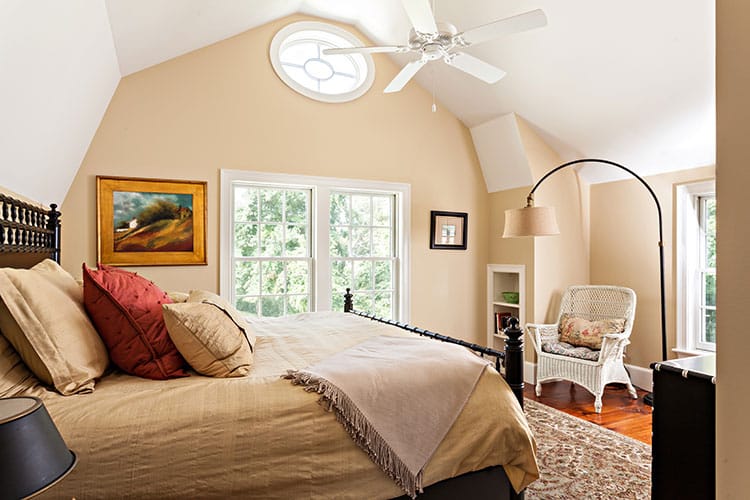
For all its antiques, fine art and beautiful objects, Carr’s Dennis home has never been intended to sit quietly and admire itself. Friends and extended family arrive frequently, particularly during the warmer months, and there is room for them. Four bedrooms in the main residence are supplemented by accommodations in the carriage house, while a separate summer house offers another distinctive setting for wine tastings and gatherings.
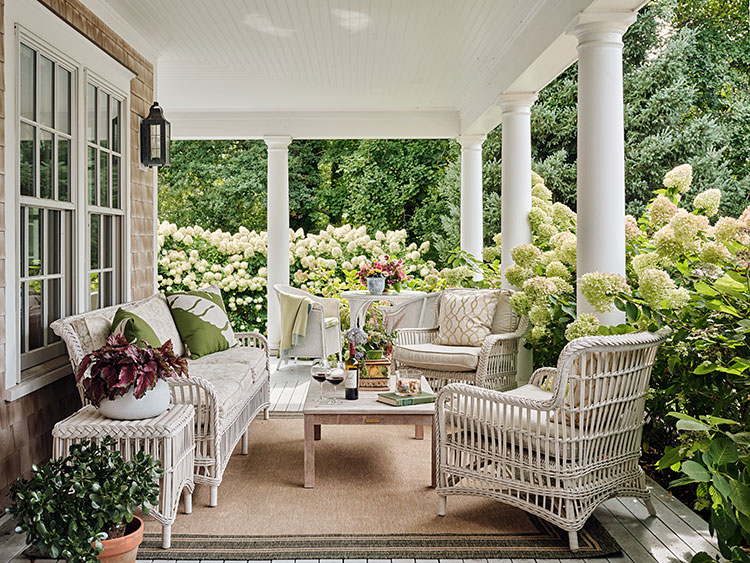
Across the rear of the main house, a long porch expands daily life outdoors, with comfortable seating and dining areas as well as an outdoor kitchen and grilling space. Tables fill. Bottles open. People linger. Hospitality, for Carr, seems less a performance; more an instinct.
That instinct extends far beyond his own circle. Across Cape Cod, Carr and Josh Cellars have become familiar supporters of charitable events, often providing wine or sponsorship for organizations working throughout the community. Carr has also opened his own property for larger fundraising gatherings, allowing the grounds that have hosted so many personal celebrations to serve a broader purpose.
It is characteristic of the way he approaches people and ideas. Carr is quick to recognize a spark—in a creative person, an entrepreneur, a charitable organization—and equally quick to get behind it. His support seldom remains at arm’s length. Relationships form. Introductions are made. Doors open.
There is something extraordinary about that quality, particularly because Carr’s beginnings were so ordinary. His talent may lie not simply in seeing possibility, but in giving possibility room to become something more.
That may explain why one of the most delightfully revealing spaces in the house is also one of its most concealed.
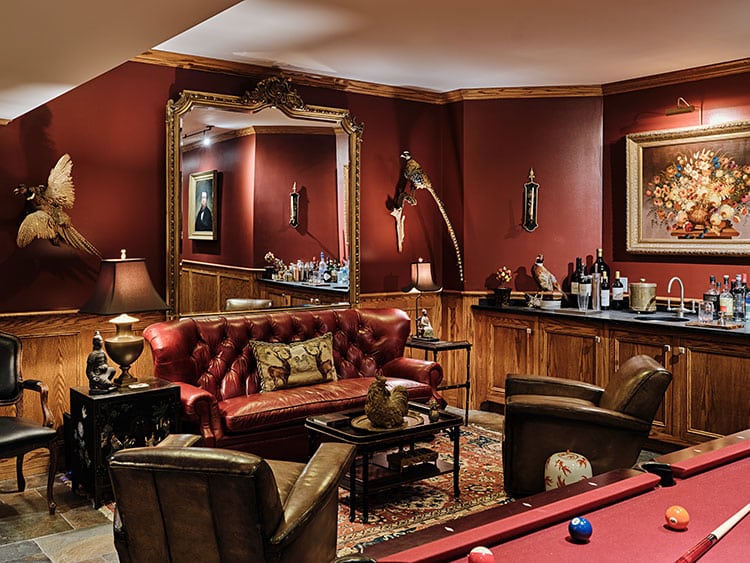
On the lower level, a masculine retreat evokes the atmosphere of an old European hunting lodge. Yet tucked within it is a secret. What appears to be a pool cue rack conceals a door. Swing it open, and another world appears.
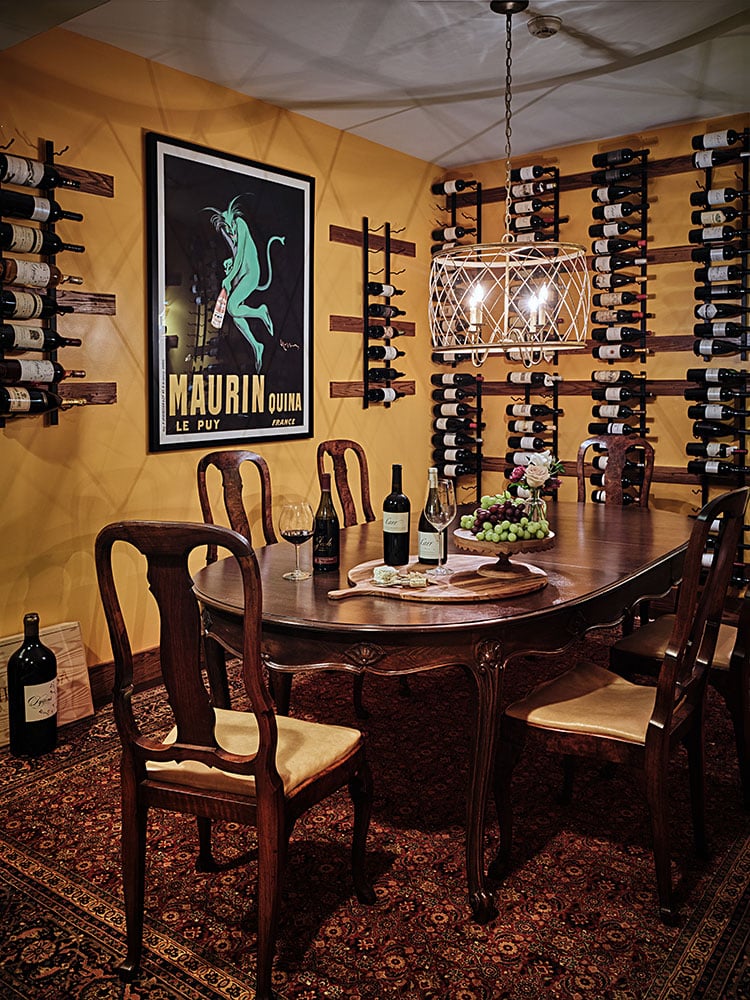
Beyond is Carr’s private wine tasting room.
Bottles line the walls in generous racks, surrounding a table large enough for eight people to settle comfortably into their chairs, pour, taste and talk. For a man whose professional life has revolved around wine, it might be expected that his inner sanctum would be devoted to the bottle. More revealing is that even this hidden, intimate room is built for company.
It is difficult to separate that instinct for gathering from the life Joe and Dee built here. Long before the gambrel house, the carriage house, the summer house and the formal garden, there was a far simpler Cape cottage.
The couple discovered Dennis almost instinctively. Asked what drew them to the village and this particular piece of land, Carr offers an explanation that is less analytical than emotional. They “just knew.”
The Cottage became home while the larger residence was being built nearby. It was there, during years when the future was considerably less certain, that Joe and Dee lived while working toward the life that would eventually unfold around them.
Today, the Cottage remains cozy, comfortable and largely unchanged.
And soon, it will be Joe Carr’s home once again.
The main house is currently for sale. After years of filling its bedrooms, tables, porches and gathering spaces with family and friends, Carr has reached a practical conclusion.
“It is a lot for one person,” he says. There is considerable meaning packed into those six words.
Yet Carr isn’t leaving Dennis. He isn’t leaving the property he and Dee once encountered and somehow “just knew” was theirs. He isn’t leaving the familiar landscape of Old King’s Highway, nor the mature trees and lake that have framed so much of his Cape life. And he isn’t leaving the garden he created for Dee.
Instead, he will move next door, returning to the Cottage where the two of them began.
Perhaps downsizing is the wrong word for such a move. In the language of Carr’s life’s work, distillation seems more appropriate: reducing something to its essence, allowing what matters most to remain.
The larger house will eventually belong to someone else. Its next owners will bring their own dinners to the dining spaces, their own guests to the porch and their own stories to rooms already rich with them. Houses, like bottles passed around a table, are ultimately meant to be shared.
Carr will remain nearby, surrounded by the landscape that he and Dee chose together so many years ago. Between where he has lived and where he is going, her garden will continue to bloom. Hydrangeas will mark its corners. Lavender will release its fragrance in summer. Water will spill steadily from the fountain. Music will drift through the open doors of the teahouse.
And just beyond it will be the Cottage.
The place where Joe and Dee started.
After a lifetime spent understanding what time can do, Joseph Carr seems to know something else as well: maturity is not about holding on to everything.
It is knowing what is worth keeping.


Julie Craven Wagner is the publisher at Cape Cod Life Publications and the editor of Cape Cod HOME.
