


Living Fossils, Lifesaving Science
Living Fossils, Lifesaving Science
Cape Cod Life / May 2026 / Nature
Writer: Dr. Marie Spadaro
Despite being one of the oldest living species, and one we frequently see on Cape Cod beaches, horseshoe crabs remain largely mysterious to many of us. But believe it or not, they play a vital role in advancing modern science.
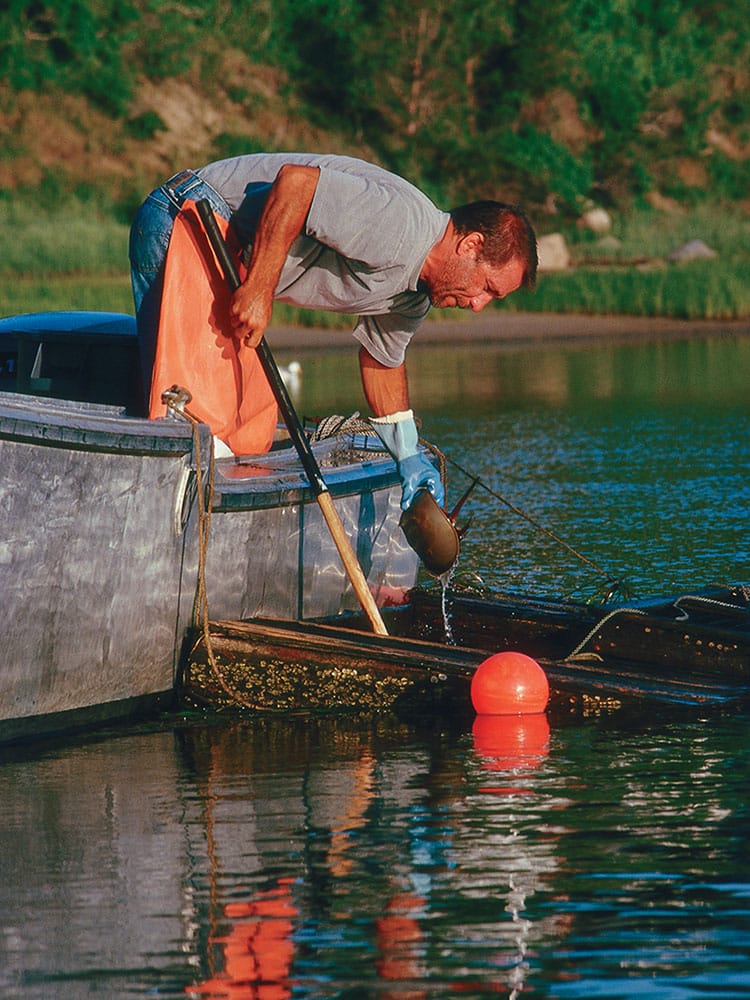
Photos supplied by Associates of Cape Cod, Inc. unless noted.
If you’ve spent any time on the beaches of Cape Cod, chances are that you’ve seen a horseshoe crab—and unless you were there with young children, you probably didn’t give it a second thought.
Would it surprise you to learn that the horseshoe crab is the oldest species you have ever seen? The modern horseshoe crab is approximately 250,000,000 years old, and its ancestors, the trilobites, are estimated to have existed as many as 540,000,000 years ago. We may call them “crabs,” but they aren’t actually crustaceans. They are Merostomata, a distinct class of arthropods. And while there are 26,000 crustacean species, there are only four types of horseshoe crabs, which live only on the eastern coasts of the continents they inhabit. The horseshoe crabs we see on our local beaches (Limulus Polyphemus) exist nowhere other than the Mid-Atlantic and Northeast coast of the U.S., and the Delaware Bay is the largest spawning ground for horseshoe crabs anywhere on the planet.
This might sound like the kind of trivia interesting only to marine biologists or ecologists. What, you might...Want to read this article and more?
Subscribe today to our Digital Edition to gain full access to this article plus every issue of LIFE or HOME for only $9.95.
